
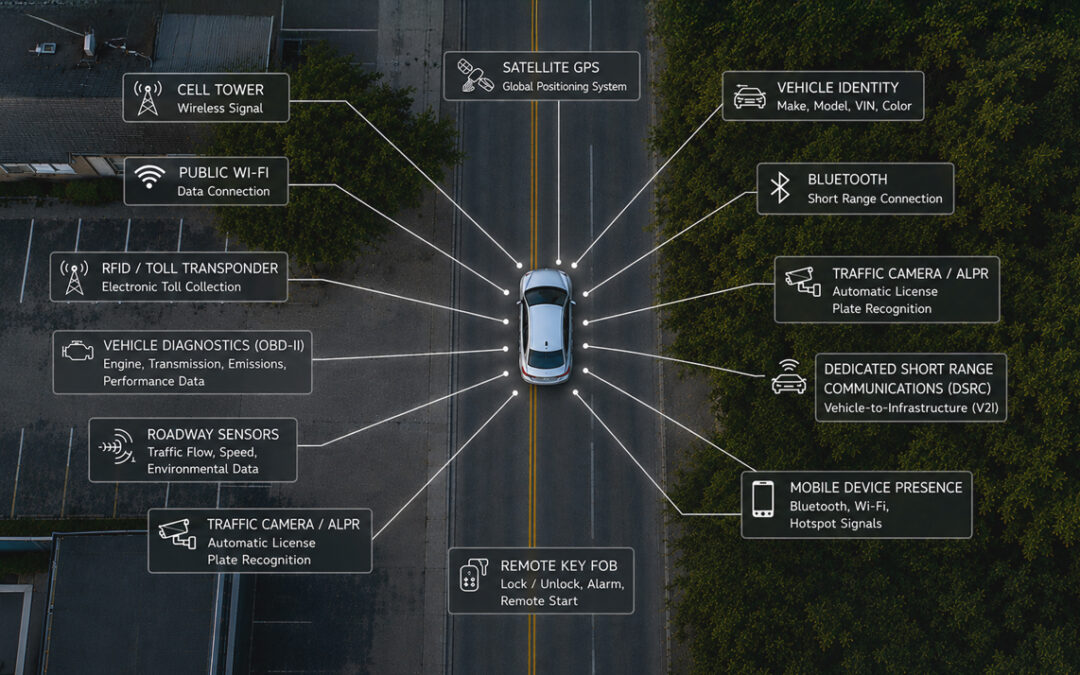
Most people think their digital footprint is limited to social media posts, emails, and web searches. In reality, modern life produces dozens of digital signals that reveal where you’ve been, what devices you own, and how you move through the world. Many of these signals are created automatically, without your knowledge or participation. Individually they may seem insignificant, but together they can provide investigators with surprisingly detailed intelligence. Understanding these hidden signals is one of the foundations of modern open-source intelligence (OSINT).
━━━━━━━━━━━━━━━━━━
1. Your Vehicle May Be Broadcasting a Unique Identifier
Modern vehicles contain numerous wireless systems that quietly communicate in the background. One example is the Tire Pressure Monitoring System (TPMS). Security researchers have demonstrated that many TPMS sensors broadcast a fixed identifier over radio frequency. With inexpensive software-defined radio equipment, those identifiers can be captured and recognized later, allowing the same vehicle to be identified without ever reading a license plate. To most drivers, tire pressure sensors are simply a convenience feature. To an investigator, they represent another digital signal that can potentially be observed and correlated over time.
━━━━━━━━━━━━━━━━━━
2. Your Wi-Fi Can Reveal Places You’ve Been
Since 2001, the WiGLE (Wireless Geographic Logging Engine) project has been collecting the locations of wireless access points around the world. Today its database contains well over one billion mapped Wi-Fi networks and billions of observations. While WiGLE does not track individuals, investigators can use Wi-Fi identifiers recovered from digital evidence—such as photographs, forensic images, or electronic devices—to determine where a specific wireless network exists in the real world. A seemingly meaningless Wi-Fi identifier can sometimes place a person at a residence, business, or other location, making wireless infrastructure an unexpectedly valuable investigative resource.
━━━━━━━━━━━━━━━━━━
3. Your Bluetooth Devices Leave Digital Breadcrumbs
Bluetooth technology is no longer limited to wireless headphones. Smartwatches, fitness trackers, earbuds, vehicle infotainment systems, and countless other devices continuously communicate using Bluetooth. Researchers continue to study methods of recognizing or fingerprinting Bluetooth devices through their radio transmissions, and modern wireless datasets increasingly include Bluetooth observations alongside Wi-Fi mapping. Individually these signals reveal very little. Combined with other information, they can help investigators establish timelines, identify recurring devices, or associate people with specific locations.
━━━━━━━━━━━━━━━━━━
4. Your Phone Is Broadcasting More Than Its Location
Even when location services are disabled, smartphones continue communicating with nearby cellular towers, Wi-Fi access points, and Bluetooth devices. Modern operating systems include important privacy protections such as MAC address randomization, but academic researchers continue exploring methods of recognizing devices using wireless metadata, timing characteristics, and radio-frequency fingerprints. The technology continues to evolve, but one lesson remains consistent: reducing your digital footprint is far more difficult than most people realize. The devices we carry every day often reveal more information than we intend.
━━━━━━━━━━━━━━━━━━
The Takeaway
Most people believe privacy is defined by what they choose to post online. In reality, your digital footprint extends far beyond social media. Your vehicle, smartphone, wireless devices, and the infrastructure surrounding you all create signals that can become valuable pieces of information when combined with other publicly available data.
Modern OSINT is rarely about discovering one dramatic clue. Instead, investigators assemble dozens of seemingly insignificant details into a larger picture. A Wi-Fi identifier, a Bluetooth signal, a TPMS transmission, or information recovered from a mobile device may appear meaningless on its own. Together, those pieces can reveal routines, locations, associations, and patterns that were never intentionally shared.
For investigators, these technologies provide powerful investigative opportunities. For everyone else, they serve as an important reminder that privacy is increasingly shaped not only by what we share—but also by the invisible signals our devices broadcast every day.
━━━━━━━━━━━━━━━━━━
Sources
• WiGLE (Wireless Geographic Logging Engine)
• IMDEA Networks
• Rutgers University WINLAB TPMS Research
• National Institute of Standards and Technology (NIST)
• Electronic Frontier Foundation (EFF)
• NDSS Symposium Wireless Privacy Research