
CALEB STARR
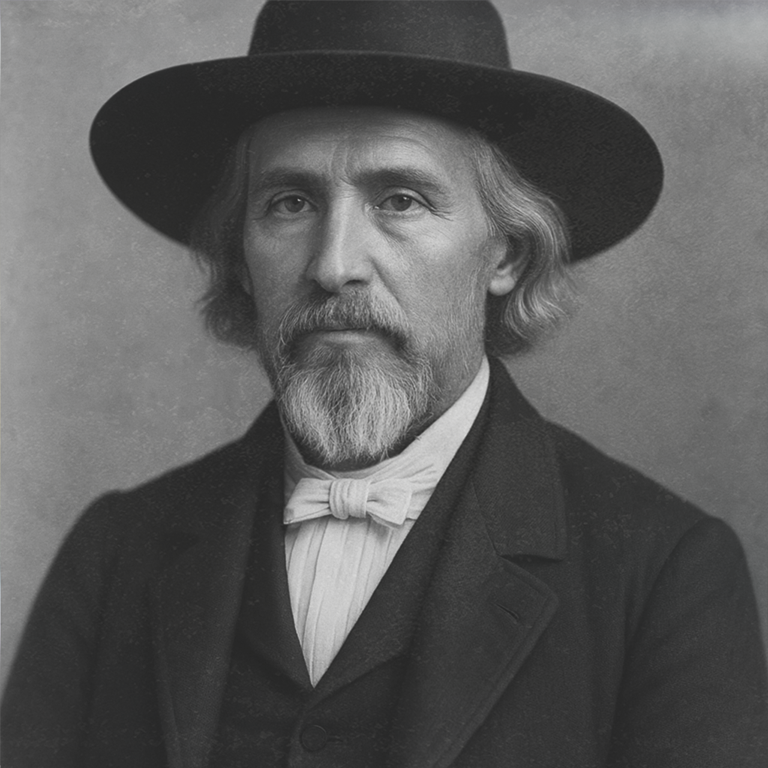
PATRIARCH TO THE STARRS
Caleb Starr: Patriarch to the Starrs
Caleb Starr was born on December 11, 1758, in what is now North Carolina. Little is known about his early life, but his story truly begins in Tennessee, where he became entangled in one of the most consequential social and political struggles of the 19th century. Caleb’s choices would set in motion a generational legacy—one that helped shape both the fate of the Cherokee Nation and the outlaw-infused frontier of what would become Oklahoma. Sometime around 1782, Caleb married Nancy Harlan, a woman of mixed Cherokee and European ancestry. Through this marriage, he entered into one of the most influential Cherokee families of the time. Nancy’s heritage connected Caleb to the Deer Clan, one of the most respected matrilineal families of the Cherokee Nation. Her father was Ellis Harlan and her mother was Ka-ti Kingfisher. Ka-ti (Catherine) was the daughter of famous Cherokee Chief, Tsu-la “Kingfisher”, and this union gave Caleb and the rest of the Starr lineage, royalty status in the Cherokee Nation.
Caleb was not Cherokee by blood, but his presence in Cherokee political life was significant. His bilingualism and connections allowed him to serve as an interpreter and intermediary between Cherokee leaders and U.S. government officials. One of the men he was closely aligned with was Joseph McMinn, who served as Governor of Tennessee from 1815 to 1821 and later as an agent to the Cherokee Nation. McMinn trusted Caleb to help carry messages and promote diplomacy during a time when tensions between settlers and tribes were rising dramatically.
Pivotal Friendship
Caleb Starr and Joseph McMinn were bound by a long friendship that began before Tennessee statehood and matured into a working partnership at the hinge between Cherokee life and U.S. policy. Tradition held that the two young men traveled south together; years later McMinn described Starr as someone he had “long been acquainted [with] since his childhood.” In office, McMinn leaned on that trust: during the removal-era compacts of the late 1810s he praised Starr’s “signal service” to the government in executing the 1817 treaty. As Tennessee’s governor, McMinn pressed the policy of exchange and compensation with Washington—corresponding with Secretary of War John C. Calhoun about Cherokee cessions— McMinn had extensive influence upstream with the administration and his friendship with Caleb made removal thinkable as a sequence of tasks rather than an abstraction. McMinn pressed the public case for exchange of countries, while Starr undertook the persuasive and practical side. McMinn then appointed him to value Cherokee “improvements” under the 1819 treaty—work that required Starr to price homes, fences, orchards, and mills and, in effect, translate policy into ledgers, receipts, and wagons. Agency daybooks across three decades record Starr supplying goods, witnessing annuity distributions, and helping settle claims, which made him a credible face of federal business in Cherokee country. By the 1820s, the pressure on the Cherokee Nation had become unbearable. White settlers hungry for land—especially after the discovery of gold in Georgia in 1929—placed the Cherokee in a precarious position.
A faction within the tribe created the Treaty Party, led by Major Ridge, John Ridge, Elias Boudinot, and others, believed that negotiating a removal treaty with the U.S. government was the only way to preserve any Cherokee autonomy. Caleb Starr, informed by his position as a cultural bridge and likely understanding the power imbalance, aligned with this view.
Caleb had already spent decades watching game grow scarce and pressure mount. That year he wrote bluntly that he had been “intimately acquainted with the Cherokees for forty-two years.” He traveled west to what is now Oklahoma to see the new potential Cherokee Nation himself and came back saying it was “the most desirable” land he had ever seen—rich in game and better suited, he believed, to “quite one half of the Cherokees” than the hunger and harassment they faced in the East. He counseled emigration not as a moral good, but as the last remaining leverage: move while the Nation could still bargain for land, annuities, and guarantees on paper. “I not only recommend my children to emigrate,” he wrote, “but if they go, I intend to follow, old as I am, if I can dispose of my property in this country.”
The Treaty of New Echota
The Cherokee leadership had for the most part always moved in step—modernizing under a written constitution in 1827 and asserting sovereignty in the face of Georgia’s encroachments—before hard experience split them over strategy into two major camps-–
Principal Chief John Ross and the National Council who pressed a legal-political defense (including the Supreme Court victory in Worcester v. Georgia in 1832) and opposed removal on any terms.
And the Treaty Party—a minority circle around Major Ridge, John Ridge, Elias Boudinot, and Stand Watie who came to judge removal inevitable.
Caleb Starr was firmly with the Treaty Party.
The Treaty of New Echota was signed on December 29, 1835, at New Echota, Georgia (present-day Calhoun), between U.S. commissioners and the Treaty Party—figures including Major Ridge, John Ridge, Elias Boudinot, and Stand Watie.
Principal Chief John Ross and the National Council did not sign it and vehemetly opposed it. It ceded all Cherokee lands east of the Mississippi River in exchange for a $5 million payment (a sum of $1.5 to $2 billion today), a new homeland in Indian Territory (present-day Oklahoma), and a schedule for complete emigration within two years of ratification, with provisions for paying for “improvements” (homes, fences, orchards), debts, and annuities; a supplemental article was added on March 1, 1836 to adjust terms. The U.S. Senate ratified the treaty in 1836 by a narrow margin, despite protests from Principal Chief John Ross and the National Council.
Many saw it as a betrayal, and its signers were labeled traitors. But to others—especially among the Treaty Party—it was an act of survival and pragmatism. Caleb Starr’s involvement didn’t go unnoticed. Although not a formal signer, his support and close association with the Treaty Party and the Ridge family and McMinn placed him firmly in the pro-removal camp. The consequences were devastating. The U.S. government enforced the treaty, leading to the forced removal of approximately 16,000 Cherokee people during the infamous Trail of Tears in 1838–1839 to what would become Oklahoma. Around 4,000 died from disease, exposure, and exhaustion on the journey west.
Caleb and Nancy were still in the East in the summer of 1838—his signature in August proves it—but he had already pledged himself to follow his children, and he did. They settled in Tahlequah in the eastern half of the new Cherokee Nation, near the Arkansas “line,” where markets were close and allies closer. If they hoped the new ground would quiet old arguments, reality had other ideas. The main body of the Nation—those who had resisted removal and were driven west in 1838–1839—arrived grieving and furious.
On June 22, 1839, Major Ridge, John Ridge, and Elias Boudinot were assassinated; in September a new constitution at Tahlequah announced a unified government under the majority leader, John Ross. The Old Settlers resented being submerged; the Treaty Party tried to keep its footing; Washington, through General Matthew Arbuckle at Fort Gibson, pressed the factions into an uneasy arrangement. On paper it nearly held. In practice it bled through.
For a brief season, the Starr name appeared on the ordinary, hopeful side of the ledger. In 1841, Ezekiel was elected to the Committee (upper house) from Flint District; James to the Committee from Going Snake; Joseph McMinn served as judge of Going Snake. That same year the family buried Nancy Harlan Starr, the Cherokee matriarch whose marriage had braided their fortunes together. Then came 1843, the year the record calls disastrous—the year faction talk turned to gunfire and ash.
The Starrs Become Outlaws
The Murder of Isaac Bushyhead
On August 8, 1943, as officials closed the books on Saline District’s election returns, Isaac Bushyhead, a Ross loyalist, was shot and killed. The shooter was identified as John Work, a white man, but accusation flowed toward the Starr circle. Jacob West—described as Ezekiel Starrs uncle by marriage—and his son John West were seized as accessories; on October 11, Jacob West was hanged. Whether the accusation was fair mattered less than how often it was repeated. The name “Starr” and the idea “accessory” began to travel together in hostile mouths, and that pairing has a way of hardening into certainty.
The Vore Murders
The other blow fell nearer Dwight Mission a few weeks earlier. On September 15, 1843, the trading post and home of Benjamin Vore burned. Inside the ruins lay Vore, his wife, and a traveler. Early reports pointed to a Cherokee band led by White Path. The Ross government soon fixed blame on the “Starr boys”—Thomas (Tom), Bean (a son of James), and Ellis (a son of Thomas)—along with Archibald Saunders. Rewards were posted for Tom and Ellis. No court ever convicted a Starr of the Vore murders, but in a political country, accusation is often sentence enough. If you want to understand the way resentment ripens into killing, you mark those two moments—the Bushyhead shooting, the Vore burnings—because they gave form to a rumor: that men named Starr believed themselves beyond the Nation’s law.
The Starr Murders
Two years later the rumor met its consequence. At dawn on Sunday, November 9, 1845, a mounted party loyal to the Ross government rode into James Starr’s yard in Flint District. James stood at a basin washing his hands; his teenage son Buck held the water. The shots came in close; James fell where he stood; Buck ran and was hit—he would die of his wounds not long after. James’s daughter Mary tried to ride for help and was driven back. Later on, they found Suel Rider—acquitted months earlier along with Washington Starr—at his mother Mary Rider Wood’s house; a man named John Tato dragged him into the yard; gunfire and a knife did the rest. Washington Starr took a ball through the arm but vaulted a fence and made the Arkansas line. A week later the tribal paper called the killings an “ebullition” of public feeling; affidavits taken by the U.S. agent describe something colder—settling a ledger at gunpoint.
Caleb’s Legacy
Set against the long slope of Caleb’s life, this is the point where a biography must tell the plain truth: the choices he made—whom he married, which work he took on, which policy he counseled, where he moved—placed his children on the fault line of a breaking nation. He married into the Ward–Harlan line and gave his sons and daughters Cherokee royalty status; he became McMinn’s reliable hand in the intimate, wrenching work of valuing homes that treaties would erase; in 1830 he told a president, and his own Starr children, that the best chance for the Cherokee people lay west while there was still time to bargain; he kept his word and joined his family and people. Those choices fixed the family on the Treaty-Party side when the Cherokee Nation organized itself in Oklahoma. From there the path is not theoretical. Bushyhead dies; Ezekiel Starr’s uncle Jacob West is hanged; the Vore place burns and the first outlaw posters go up with Starr’s names inked in; James Starr is shot dead in his yard along with his son Buck Starr and Washington Starr runs bleeding for the line. People who had eaten at the same tables for years no longer said hello in the lane. Doors that had been left on the latch were barred against night riders. In such a country, the law you trust is the law you can enforce.
That is the hinge on which the later outlaw stories swing. The son who survived the James Starr massacre, Tom Starr—did what hardened men do when courts cannot or will not keep faith. He went on a vengeance tour, hunting down the riders who had come to his father James’ gate and killed them all. Later years saw Tom Starr’s place on the Cherokee Nation used as cover by outlaws of every sort, leading to a disproportionate amount of bad hombres occupying the Sooner state and countless crimes.
Cause and Effect
None of this makes Caleb a villain or a saint. He fed people who came to his door; he owned slaves on the Hiwassee; he witnessed annuity distributions and counted peach trees for ledgers that softened the blow of loss without erasing it; he was called “venerable” by some who buried him and “traitor” by others who had their own dead to count. What can be said, without embroidery, is that he lived as though difficult choices could be made cleanly if they were made early and explained plainly. He told his children what he believed—that the western country was good and the eastern fight was lost—and then he proved his faith by following them. He died in 1843 in the Going Snake District, Cherokee Nation, I.T. — two years before the massacre of his son and grandson.
In the end, the measure of his life is consequence. The mill on Conasauga near Starr Mountain led to the New Indian Territory in eastern Oklahoma and that lead to Marshals learning to ride in pairs to see Tom Starr at his property north of the Canadian River. Caleb Starr, bound by marriage to Cherokee Royalty, chose the forward path when every other door seemed to shut. The outlaw tales belong to another chapter, but Caleb placed the hinge and the door swung exactly as you would expect in a hard wind.
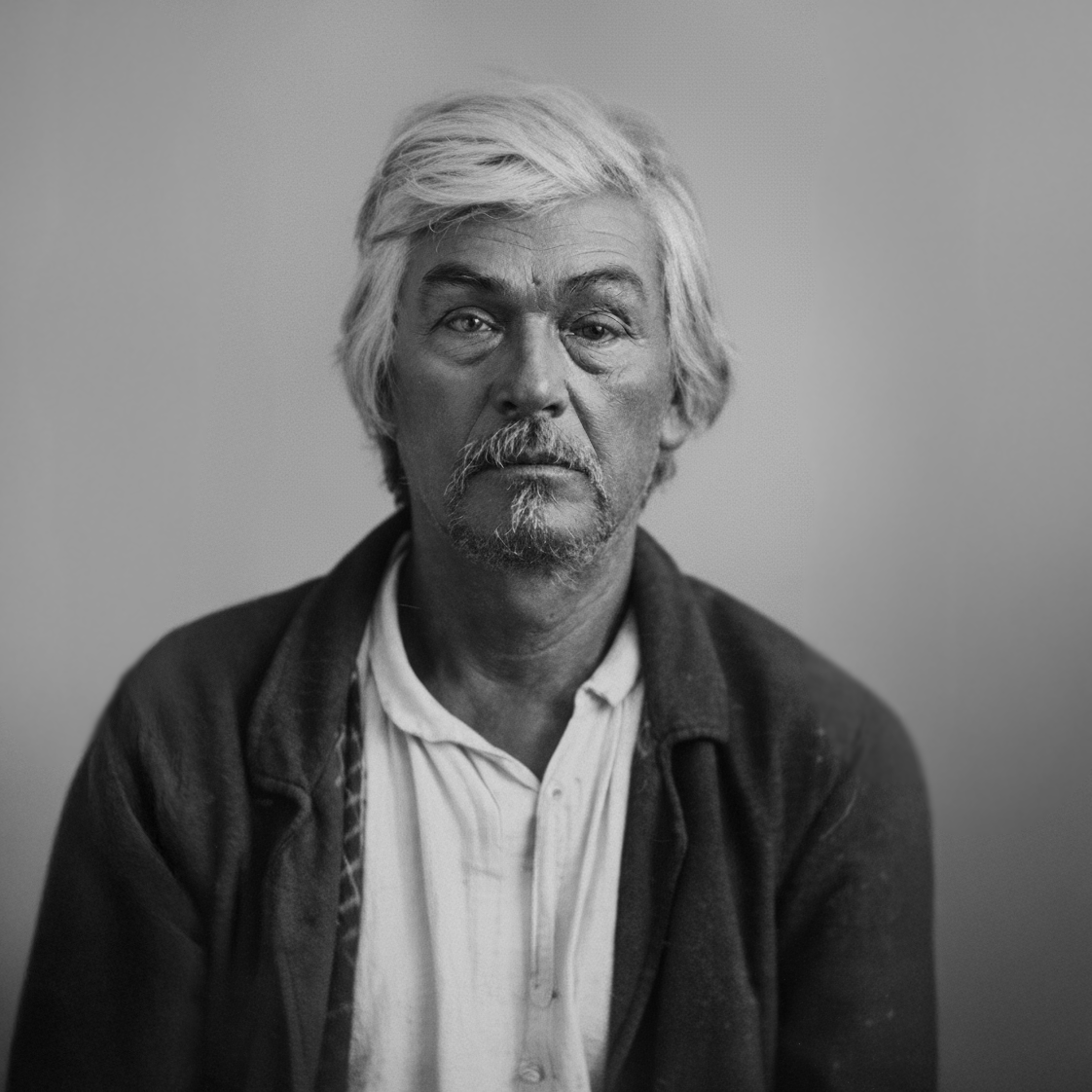
TOM STARR
A towering figure of the Cherokee frontier, Tom Starr earned a reputation as a relentless fighter during the bloody feud that tore his Nation apart. Feared and revered, his ruthless code of loyalty and vengeance birthed Oklahoma’s most infamous outlaw bloodline.
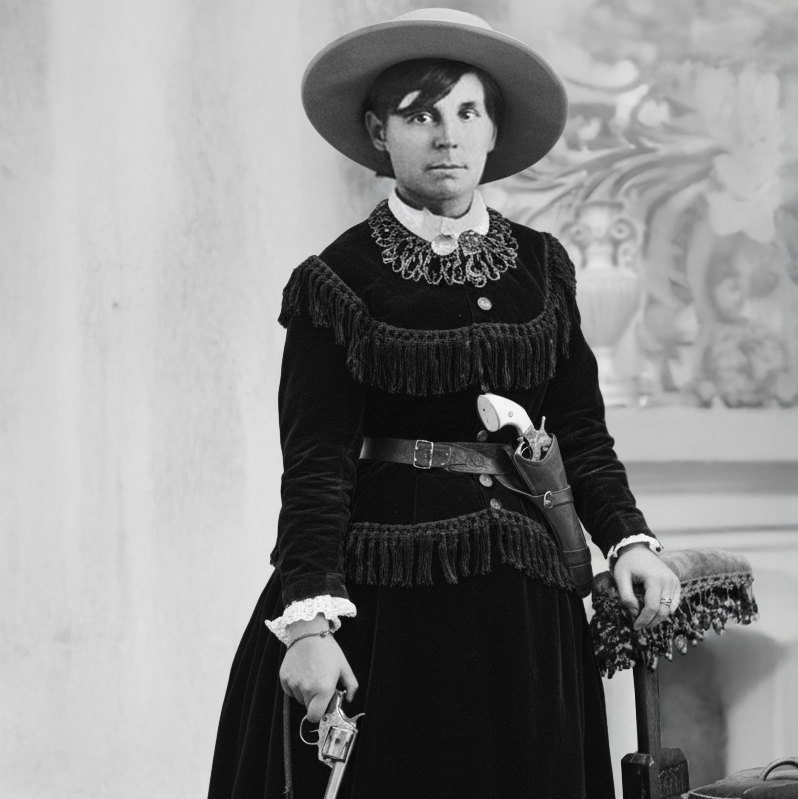
BELLE STARR
Belle Starr, the famed “Bandit Queen,” rose from cultured beginnings to command Younger’s Bend alongside Sam Starr. Witty, fearless, and cunning, she turned outlaw Oklahoma into her stage, mastering survival while building the enduring legend of America’s notorious outlaw woman.
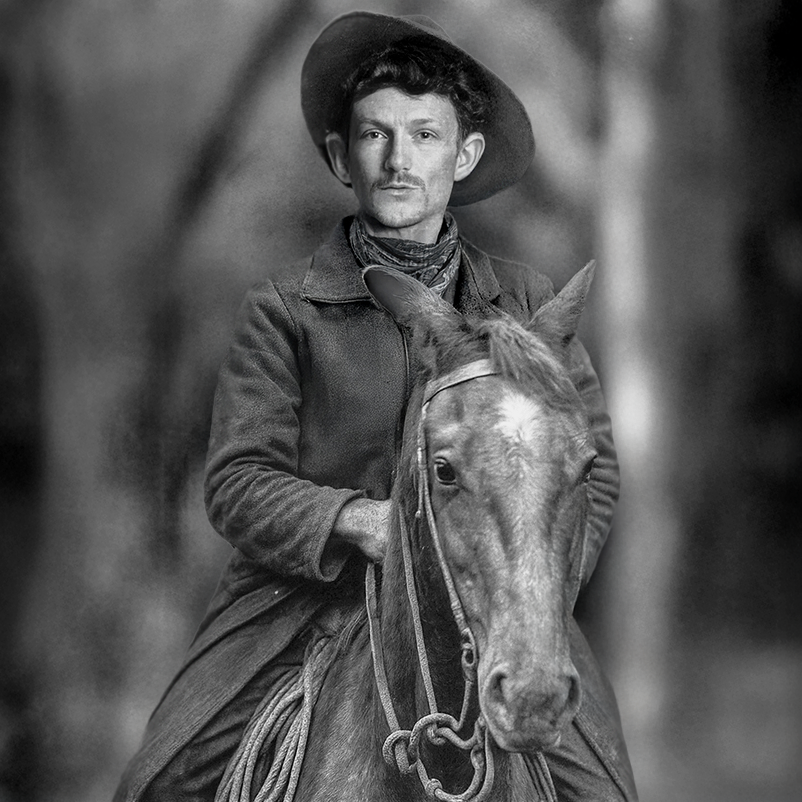
SAM STARR
Son of the feared Cherokee warrior Tom Starr, Sam inherited both his family’s feuds and their fierce reputation. At just twenty-five he wed Belle Starr, turning their Eufaula homestead into a sanctuary for fugitives and laying the foundation for Oklahoma’s outlaw dynasty.
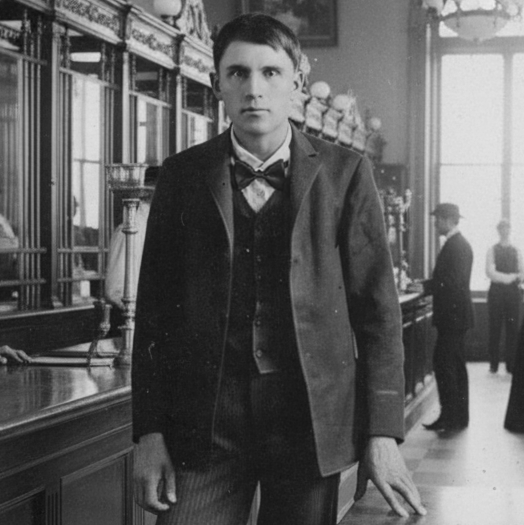
HENRY STARR
Born in 1873 near Fort Gibson, Henry Starr carried his uncle’s violent legacy into a new century. He masterminded audacious bank robberies—fourteen in five months—earning both presidential pardons and infamy as the last great outlaw of Oklahoma’s turbulent frontier.