
HENRY STARR
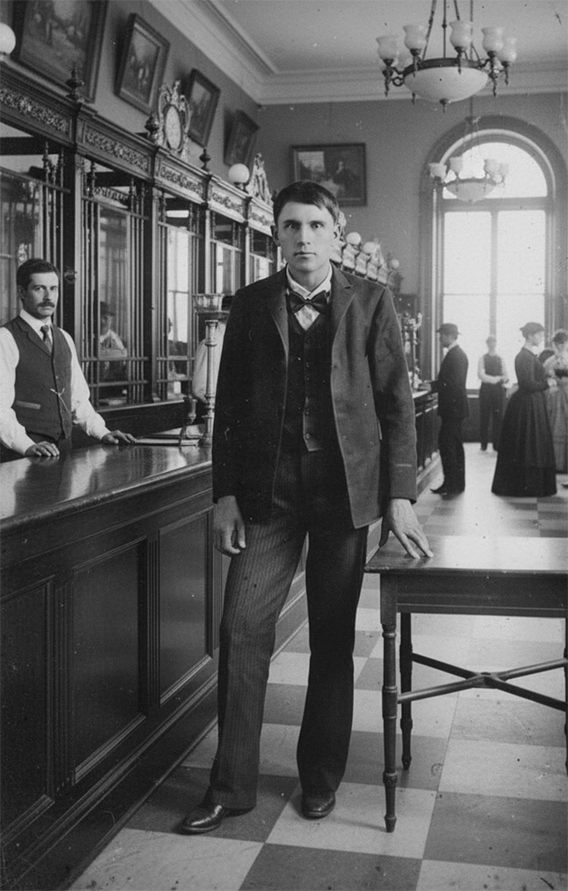
HENRY STARR: THE LAST RIDE OF THE CHEROKEE BADMAN
Prologue: The Echo of Gunfire in a Taco Shop
Today, on the picturesque town square of Bentonville, Arkansas, patrons of the Taco & Tamale Co. savor margaritas and spicy cuisine, their conversations mingling with the clink of glass and cutlery. The sunlight glints off modern art installations, and the air buzzes with the prosperous energy of a 21st-century boomtown. Few, if any, give a second thought to the foundations beneath their feet. Yet, long before the scent of cumin and lime filled this space, the air here was thick with the acrid smell of gunpowder, the metallic tang of fear, and the booming command of outlaws: “Open the vault, get on the ground now – this is a robbery!”
On a summer afternoon in 1893, this very spot was not a restaurant but the People’s Bank, and the quiet town of Bentonville was transformed into a battlefield. The man who orchestrated the chaos was no ordinary bandit. He was a professional, a strategist, a man who saw bank robbery not as a desperate act, but as a craft. His name was Henry Starr, and his life story is a sprawling, violent, and paradoxical epic that stretches from the bloody aftermath of the Civil War to the dawn of the American automobile age. He was a man caught between two worlds: his Cherokee heritage and the encroaching white civilization, between a desire for respectability and an addiction to the outlaw’s thrill, between the romantic era of the horseback bandit and the mechanized modernity that would ultimately kill him. He was the last of his kind, and his career encapsulates how the notorious Starr family not only operated within Oklahoma’s lawless shadow but actively helped cast it, forging a legacy that would brand the nascent state as the quintessential “outlaw state” for generations to come.
The Inheritance of the Starr Name
Henry Starr entered the world on December 2, 1873, near Fort Gibson in the heart of the Cherokee Nation, Indian Territory. The world that greeted him was one of profound turmoil and transition. The bitter internal strife of the Cherokee Civil War had subsided only a decade earlier, and the long shadow of the Trail of Tears still darkened the collective memory of his people. He was born to George “Hop” Starr, a mixed-blood Cherokee, and Mary Scott Starr, a woman of Irish descent and one-quarter Cherokee blood. From the beginning, Henry was a product of dualities. From his mother, he inherited a lineage of relative respectability and education; Mary came from a good family and instilled in her children a sense of propriety that would curiously persist throughout Henry’s life.
But it was the Starr name that would truly define him. His grandfather was the infamous Tom Starr, a man so fearsome he was known throughout the territory as “the Devil’s own.” As historian Michael Wallis notes, Tom Starr was a figure of legendary violence, a guerrilla fighter whose “fists alone were lethal weapons and he could kill a man with one blow.” A staunch Confederate sympathizer, Tom Starr’s home along the North Canadian River, known as Younger’s Bend, became a notorious sanctuary for the most wanted outlaws of the American West—a place where the James and Younger gangs could find safe haven, whiskey, and plotting partners. Young Henry spent his formative years at this grandfather’s feet, absorbing tales of bloody resistance, whiskey-running, and a deep-seated animosity for any authority that sought to impose its will on the Starr clan.
This animosity was political as well as personal. As author and historian Richard Slotkin explains, “The Starrs were on the weaker side of intra-tribal political conflicts, dating back to the time before the Trail of Tears. They opposed John Ross, titular head of the Cherokee Nation.” This position as political outsiders fostered a culture of defiance and self-reliance that easily bled into outright criminality.
The family’s notoriety was further cemented by Henry’s uncle, Sam Starr, and his wife, the legendary Belle Starr, the “Bandit Queen.” Belle, a frequent visitor to Younger’s Bend, was a sharp, calculating woman deeply enmeshed with the Younger gang and other criminal elements. Henry, however, wanted no association with her. He found her manner crude and repulsive, and he was always quick to inform anyone who asked that Belle was his aunt “by marriage only,” a telling distinction that revealed his own complex sense of honor and propriety.
The landscape of Henry’s youth was as wild as his family. The Osage Hills near Tulsa, a rugged, rock-hewn forest, was universally known as “Robbers’ Roost.” Its labyrinthine caves and dense thickets provided perfect sanctuary for bandits, smugglers, and fugitives. In this environment, the line between frontier survival and outright outlawry was dangerously thin.
This tense existence shattered in 1886 when Henry’s father died, leaving Mary to care for three children and the family farm. In a move Henry would forever resent, she soon remarried a man named C.N. Walker. Henry despised his new stepfather, considering him inferior because “his veins contained no Indian blood,” and history records Walker as abusive. The friction was immediate and unbearable. Within months of the marriage, the proud and stubborn teenager left home for good, determined to make his own way in a world that seemed increasingly stacked against him.
By sixteen, he was working as a cowboy on a ranch near Nowata. It was here that he had his first, fateful run-ins with the law—encounters that would shape his entire worldview. The first was for “introducing spirits into the territory.” While driving a wagon to town, two deputy marshals found whiskey hidden in it. Henry pleaded guilty but maintained his innocence, claiming he had borrowed the wagon unaware of its illicit cargo. The law was uninterested in his excuses.
But darker days awaited. In December 1891, he was arrested for stealing a horse—a capital offense in the territory. Again, he vehemently denied the charge. But his name was Starr, and in the eyes of the authorities, that was evidence enough. He was locked in the infamous Fort Smith jail, a dank, overcrowded hellhole known to inmates as “Hell on the Border.” Hundreds of men were crammed into two underground rooms devoid of light, ventilation, or sanitation. The experience was searing. For a young man already predisposed to distrust authority, it was a brutal lesson in injustice. His cousin managed to scrape together bail, and Henry was released, but a warrant now hung over his head like a storm cloud. He had been pushed, and he made a conscious decision not to turn back. The path of the outlaw, for Henry Starr, began not with a desire for wealth, but with a burning sense of persecution. As Richard Slotkin articulates, “For Henry, choosing an outlaw way of life was a viable, even honorable response to perceived injustice and persecution.”
Wolf Creek and the Point of No Return
With a warrant out for his arrest, Henry had nothing left to lose. He joined up with Ed Newcome and Jesse Jackson, forming his first gang. They began a series of small-time robberies, targeting the soft underbelly of the territory’s commerce: stores and railroad depots. In July 1892, they hit the Nowata Depot, netting $1,700. In November, they robbed Shufeldt’s Store in Lenapah for $300 and Carter’s Store in Sequoyah for $180. They were modest scores, but they were a start.
The law, however, was closing in. The warrant for Starr’s arrest had been given to Deputy Marshals Henry C. Dickey and Floyd Wilson, and they were dogged in their pursuit. Their chase led them to the “XU Ranch,” eight miles from Nowata, on December 13, 1892. After a fruitless search, they were having dinner at the ranch the next day when the owner mentioned he’d seen Henry.
What happened next on the banks of Wolf Creek is shrouded in the contradictory fog of history. Marshal Wilson, mounted on a saddled horse, raced ahead of his partner and found Henry in a clearing. According to Henry’s later account, Wilson fired a warning shot first. Wilson, mounted and armed, ordered the teenager to surrender. Henry, on foot, simply “walked away.” Wilson rode closer, dismounted, raised his rifle, and fired—Henry claimed over his head. In that instant, the teenage fugitive spun and returned fire. His shots were accurate. Wilson was hit and fell to the ground, badly wounded. As the marshal fumbled with his jammed rifle and reached for his pistol, Starr fired twice more. Then, in an act that erased any claim to self-defense, Henry Starr walked calmly over to the wounded, defenseless lawman and fired a final round directly into his heart. The muzzle flash was so close it burned the fabric of Wilson’s shirt.
The sound of the shots spooked the horses, but Henry managed to catch Wilson’s mount and flee. By the time Marshal Dickey arrived on the scene, it was all over. Henry Starr was now a murderer. The Indian Police picked up his trail near Bartlesville in January 1893, and another gunfight erupted, but Henry escaped. The stakes had been raised permanently. There was no longer any hope of a quiet life. He had graduated from petty thief to cold-blooded killer, and the manhunt intensified accordingly.
The Architect of Daylight Robbery
Now partnered with the cool-headed Frank Cheney, Henry Starr decided to think bigger. Petty depot robberies were beneath him now. He set his sights on the ultimate score: banks. On March 28, 1893, they rode into Caney, Kansas. At midday, with a breathtaking audacity that would become his trademark, they burst into the Caney Valley Bank, each brandishing two Colt revolvers.
While they corralled the customers, a cashier broke away and sprinted for the manager’s office. Starr gave chase. He later recounted the standoff in his autobiography: “He had his hand on a big Winchester, but I shoved both pistols full cocked into his face, he dropped his before I could command him to do so.” The thieves emptied the vault, stuffed $4,900 into an old two-bushel sack, locked everyone in a back room, and exited calmly out the back. They were galloping into the hills before the alarm was even raised. One Kansas newspaper declared it “one of the boldest and most daring robberies known to border history.” For Henry, the rush was transformative. This was no petty crime; it was a high-stakes game of nerves and skill. He was addicted.
A little over a month later, they upped the ante again, robbing a Missouri, Kansas and Texas passenger train near Pryor Creek, making off with $6,000 in cash and jewelry. But Henry was already planning his masterpiece, a job that would provide the funds for him to retire and marry the woman he loved, who had promised to wed him only if he abandoned his life of crime. He chose the People’s Bank in Bentonville, Arkansas.
For a week, he lurked in the town, playing the part of a harmless traveler. He mapped every alley, noted the bank’s routine, and even charmed Town Marshal Ben Allison to learn his habits. He knew where the town’s guns were stored and when the bank was most vulnerable. On June 5, 1893, he put his plan into action.
Around 2:30 p.m., six armed men met Starr in an alley. His crew was assembled: Frank Cheney, Bud Tyler, Hank Watt, Kid Wilson, Link Cumplin, and a mysterious figure known only as “Happy Jack.” After taking several townspeople hostage, they left Happy Jack to guard them and the horses. The others, rifles held openly, marched toward the bank. Link Cumplin stationed himself on the entrance steps between two iron pillars. In a bellowing voice, he ordered everyone to clear the street and fired a warning shot from his Winchester. The peaceful afternoon exploded into chaos. Citizens dove behind barrels and into doorways.
Inside, it was a tense but professional affair. The robbers forced cashier J.C. McAndrew to open the vault. They loaded gold and currency into one bag and heavy silver coins into another. But outside, Bentonville was waking up for a fight. The initial shock wore off, replaced by a fierce resolve. Marshal Allison and Sheriff Pierce Galbraith ran to get their guns. Store owners Joe Peel and Colonel J. Dillard James joined Deputy W.L. Marley near the courthouse. Armed with a revolver, James advanced down the square, firing whenever the gunmen weren’t looking. He eventually got close enough to put a bullet into Link Cumplin.
The gunfire escalated. Cumplin would be hit at least eight times, one shot taking out his eye. Knowing their time was up, the robbers used four bank officials as human shields, forcing assistant cashier George Jackson to carry the heavy sack of silver. As they passed a local office, a newspaper worker named Miss Maggie Woods flung open the door, yanked Jackson inside, and slammed it shut. In that moment of confusion, she hid the 65-pound bag of silver upstairs—money that would save the bank. Under a hail of bullets, the bandits made it to their horses and tore off south. Starr’s planning paid off; they had fresh horses waiting at intervals, while the pursuing posse’s mounts tired. They had escaped.
But the victory was hollow. Their take was $11,000, far less than the fortune Henry had dreamed of. After a seven-way split, it wasn’t enough to retire or marry his love. He never would. The botched robbery, the fierce resistance, and the death of Cumplin marked a turning point. The era of the unchallenged outlaw was ending. Towns were no longer easy prey; they were communities willing to fight for their own.
The Hanging Judge and the Cherokee Standoff
With a $5,000 reward on his head, Starr decided to leave the territory. He, Kid Wilson, and a lady friend boarded a train for California, aiming to disappear. But with loot burning a hole in his pocket, they decided to travel in style, stopping in Colorado Springs on July 1, 1893. They checked into the luxurious Spaulding House hotel, went shopping, and dined at the Café Royal. They were playing the part of wealthy tourists, but Henry’s notoriety was his undoing. A visitor from Fort Smith recognized him and alerted authorities.
On July 3, officers arrested Henry at dinner. Though armed with a .45, he surrendered peacefully. Kid Wilson was captured at a nearby brothel, and the woman was arrested in her room, where authorities found a stash of cash and gold. Starr and Wilson were returned to Fort Smith to face justice.
He stood trial before the most feared judge in American history: Isaac C. Parker, the “Hanging Judge.” Charged with thirteen counts of highway robbery and the murder of Floyd Wilson, Starr’s fate seemed sealed. The trial focused on the murder, and Parker found him guilty, sentencing him to hang on February 20, 1894. The Supreme Court granted a stay. A second trial in June 1894 reached the same verdict; again, the Supreme Court intervened. As his future hung in legal limbo, fate intervened in the form of another legendary outlaw.
Crawford Goldsby, aka Cherokee Bill, was an even more vicious killer than Starr. Judge Parker called him a “blood-thirsty mad dog who killed for the love of killing.” On July 26, 1895, Bill got a revolver smuggled into the prison and attempted a breakout, killing a guard in a gun battle before retreating to his cell for a standoff. The guards were terrified to approach him.
Starr’s cell was just down the row. Whether prompted by guards or on his own initiative, Henry bravely entered Bill’s cell and talked to him. After being assured he would not be killed, the dangerous Cherokee Bill agreed to surrender his weapon. This act of courage would not be forgotten.
In the meantime, Congress replaced Judge Parker with Judge John R. Rogers. On October 6, 1897, Starr was allowed to plead guilty to the lesser charge of manslaughter for Wilson’s death. Combined with sentences for robbery, he was given 13 years and 8 months and sent to the federal prison in Columbus, Ohio.
His story, however, had captivated the nation. His mother and the Cherokee Council petitioned President Theodore Roosevelt for a pardon. Roosevelt, a romantic enthusiast of the American frontier, was impressed by the saga of the Cherokee bandit and particularly by his brave act in disarming Cherokee Bill. In 1903, Roosevelt commuted his sentence. On January 16, Henry Starr, the man twice sentenced to hang, walked out of prison a free man. It was a decision President Roosevelt would soon come to regret.
The Unraveling of a Second Chance
Starr returned to Tulsa a changed man, or so it seemed. He went to work in his mother’s restaurant, determined to live an honest life. In September 1903, he married Ollie Griffin, and a year later, they had a son. In a telling gesture of gratitude—or perhaps shrewd public relations—he named the boy Theodore Roosevelt Starr.
For a few years, he stayed straight. But the past would not release him. Authorities in Arkansas, unsatisfied with his light sentence for the Bentonville affair, began seeking his extradition. The feeling of being hounded, despite his efforts to go straight, hardened his heart. He later wrote a line that perfectly captured his philosophy: “I preferred a quick and unostentatious internment in a respectable cemetery, than a life on the Arkansas convict farm.”
He fled back to the sanctuary of the Osage Hills and fell in with his old companions. The pull was too strong. In 1908, he crossed into Kansas and robbed the bank in Tyro. Pursued by a twenty-man posse, he still got away. He and Kid Wilson then headed west, hitting the bank in Amity, Colorado, for a meager $1,100. It was here that his luck ran out. A letter he wrote to a friend in Tulsa was betrayed, and he was arrested on May 13, 1908.
He pleaded guilty and was sentenced to 7 to 25 years in the Colorado State Penitentiary at Canon City. Ever the intellectual, Starr used his time productively. He worked as a trustee, studied law in the prison library, and penned his autobiography, Thrilling Events: Life of Henry Starr. On September 24, 1913, he was paroled on the condition he never leave Colorado. Henry Starr, of course, had no intention of keeping that promise.
The Daylight Bandit King
He immediately returned to Oklahoma and to what he did best. Between September 1914 and January 1915, Henry Starr engineered the most stunning streak of bank robberies the state had ever witnessed. Fourteen banks in five months, all hit in daylight with clinical precision at two-week intervals. The list reads like a tour of Oklahoma’s nascent towns: Keystone, Kiefer, Tupelo, Pontotoc, Byars, Glencoe, Wardville, Prue, Carney, Preston, Owasso, Terlton, Garber, Vera. The takes varied, but the message was clear: no bank was safe. The state legislature,
panicked by the cries of its citizens, passed the “Bank Robber Bill,” appropriating $15,000 to capture bandits and placing a $1,000 bounty on Starr’s head, “dead or alive.”
The genius of this spree was his hiding place. While posses and lawmen tirelessly scoured every cave and thicket in the Osage Hills, the most wanted man in Oklahoma was living in plain sight. As Richard Slotkin reveals, he rented an apartment at 1534 East Second Street in the heart of Tulsa—just two blocks from the county sheriff and four blocks from the mayor. A dusty, part-Indian cowboy riding into town was too ordinary a sight to attract attention.
Emboldened by his success, he decided to cement his legend with one final, spectacular feat: a double bank robbery, simultaneous hits on two banks in broad daylight. The Dalton Gang had tried this in Coffeyville, Kansas, in 1892 and were wiped out. Henry Starr was sure he could succeed where they had failed. He chose Stroud, Oklahoma.
On the morning of March 27, 1915, eight well-dressed men tied their horses to a stockyard fence on 3rd Avenue. Three went north to the First National Bank on 4th Street; four, including Starr, went south to the Stroud National Bank on 3rd Street; one man stayed with the horses. As Henry entered the bank, he calmly drew his revolver and leveled it at the teller, his accomplices corralling the frightened patrons. He grinned and demanded everything in the safe—a phrase he never tired of.
But word spread through the small town like wildfire. As the gang exited the banks and regrouped, the citizens of Stroud, like those of Bentonville before them, took up arms. The quiet streets erupted into a deafening cacophony of gunfire. Shopkeepers, grocers, and saloon patrons fired from windows and doorways. The gang scattered under the onslaught. A twenty-year-old youth named Paul Curry, grabbing his uncle’s hog-slaughtering shotgun, fired and hit both Henry Starr and his accomplice Lewis Estes, wounding them badly. The rest of the gang fled with $5,815, technically accomplishing the double robbery, but leaving their leader behind.
After recovering from his wounds, Starr stood trial, pleaded guilty, and was sentenced to 25 years in the Oklahoma State Penitentiary at McAlester.
The Silver Screen Bandit
In McAlester, a new Henry Starr emerged. He became a model prisoner, preaching fervently against the folly of crime. “I’m 45 years old now,” he told a reporter from the Oklahoma World, “And 17 of my 45 years have been spent ‘inside.’ Isn’t that enough to tell any boy that there’s nothing to the kind of life I have led?” His good behavior and eloquent renunciation impressed officials, and he was paroled on March 15, 1919, after serving only four years.
He was now a celebrity, and he knew how to capitalize on it. He parlayed his infamy into a starring role in the silent film A Debtor to the Law (1919), a dramatic re-creation of the Stroud heist that he both produced and acted in. In a surreal twist of life imitating art imitating life, he returned to Stroud to film it, enlisting the very people who had captured him—including the bank teller and Paul Curry, the boy who had shot him—to play themselves. The film was a huge success. He even received an offer from Hollywood but turned it down, fearing California authorities would extradite him to Arkansas.
He seemed to have finally found a legitimate outlet for his ambitions. He married his third wife, Hulda, moved into a comfortable house in Claremore, and enjoyed a steady income from his movies. For two years, Henry Starr lived the honest life he had so long sought.
The Last Ride: Death by Automobile
But the restlessness never left him. The adrenaline rush of the heist was a siren song he could not ignore. The quiet life of a movie star and homeowner was, in the end, a cage. On the morning of February 18, 1921, Henry Starr, now 47 years old, did something that symbolized the passing of an era: he and three accomplices drove to Harrison, Arkansas, in an automobile.
They entered the People’s State Bank. As they collected their loot—about $6,000—the former bank president, W.J. Myers, slipped into the vault, grabbed his Winchester rifle, and opened fire. A single .44-40 slug slammed into Henry’s back, severing his spine. His partners fled empty-handed, leaving him behind.
He was carried to the county jail, where doctors removed the bullet, but the wound was mortal. As he lay dying, the old pride surfaced one last time. He gasped to the doctors, “I’ve robbed more banks than any man in America.” It was not an empty boast. The next day, February 22, 1921, with his wife, mother, and 17-year-old son by his side, Henry Starr died. True to the outlaw code he had lived by, he never revealed the name of a single partner.
The Starr Legacy and the Outlaw State
Henry Starr’s career was a study in paradox. He was a professional thief who didn’t drink, smoke, or curse. A murderer who claimed a personal code against killing. A man who craved respectability but was addicted to lawlessness. By his own count, he robbed more than 21 banks—more than the James-Younger and Doolin-Dalton gangs combined—netting nearly $60,000, the equivalent of over $1.5 million today. Much of it was never recovered, reportedly buried somewhere along the Cimarron River in Kansas, in a place “nobody could find it in a million years.”
But his true legacy is not measured in dollars, but in the indelible mark he and his family left on Oklahoma. The Starrs—Tom, Sam, Belle, and Henry—were more than just outlaws; they were architects of a myth. They provided not just literal sanctuary in the Cookson and Osage Hills, but a cultural permission slip for lawlessness. Their exploits, sensationalized in dime novels and newspapers, painted Oklahoma as a “Land of the Six-Gun,” a place beyond the reach of conventional authority, a last refuge for those who lived outside the law.
This “Starr Effect” was a powerful attractor. It drew fugitives from across the nation, reinforcing the territory’s—and later the state’s—reputation as an outlaw haven. Henry’s success, particularly his audacious double robbery in Stroud, proved that even the most brazen crimes could be pulled off, inspiring a new generation of bandits.
His death, arriving in an automobile, was profoundly symbolic. He was the last of the great horseback outlaws. As he died, the world that created him was vanishing. Highways like Route 66 were about to stitch the remote wilderness into the national fabric, and Tulsa was transforming from a rough cow town into the “Oil Capital of the World.” The era of the lone bandit galloping across the open plain was over, replaced by the get-away car and the organized crime of the Prohibition era.
Henry Starr was the final, fleeting embodiment of that older, wilder West. His life was a bridge from the frontier violence of his grandfather Tom Starr to the modern 20th century. In his failures and his successes, his brutality and his strange charm, he perfectly encapsulated the chaos, the ambition, and the deep-seated conflict that forged the state of Oklahoma, ensuring that its identity would forever be intertwined with the legend of the outlaw.
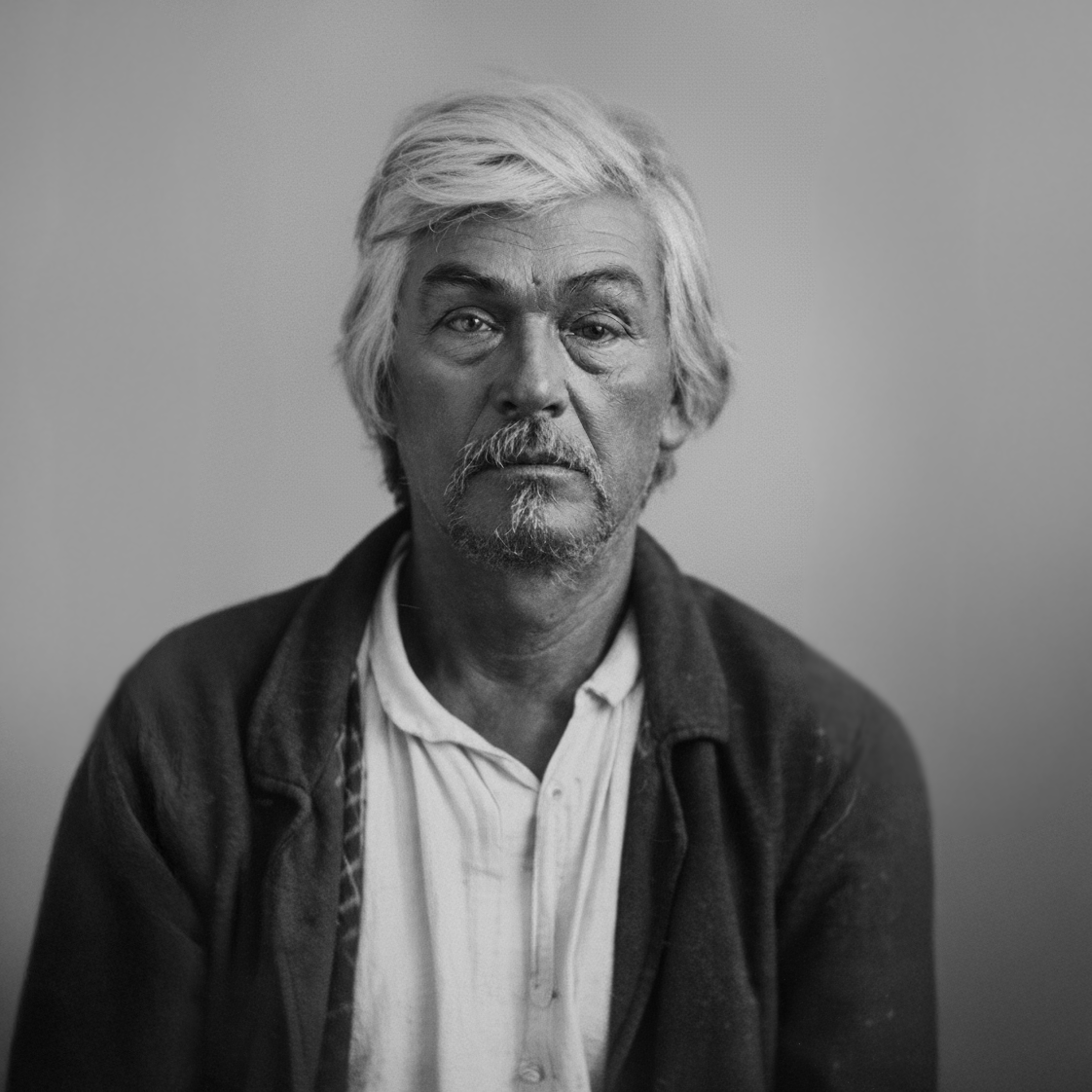
TOM STARR
A towering figure of the Cherokee frontier, Tom Starr earned a reputation as a relentless fighter during the bloody feud that tore his Nation apart. Feared and revered, his ruthless code of loyalty and vengeance birthed Oklahoma’s most infamous outlaw bloodline.
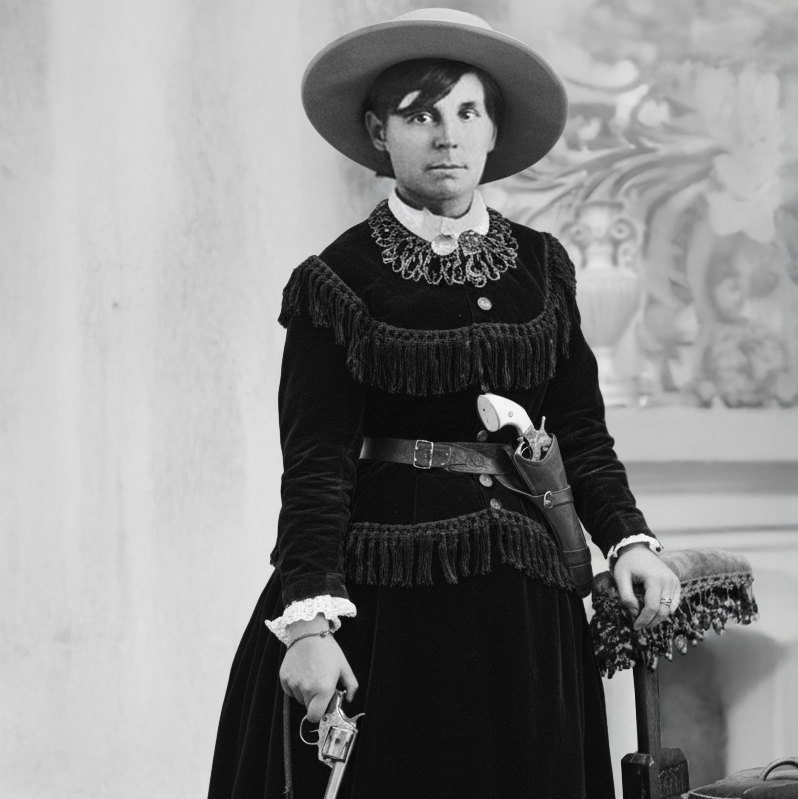
BELLE STARR
Belle Starr, the famed “Bandit Queen,” rose from cultured beginnings to command Younger’s Bend alongside Sam Starr. Witty, fearless, and cunning, she turned outlaw Oklahoma into her stage, mastering survival while building the enduring legend of America’s notorious outlaw woman.
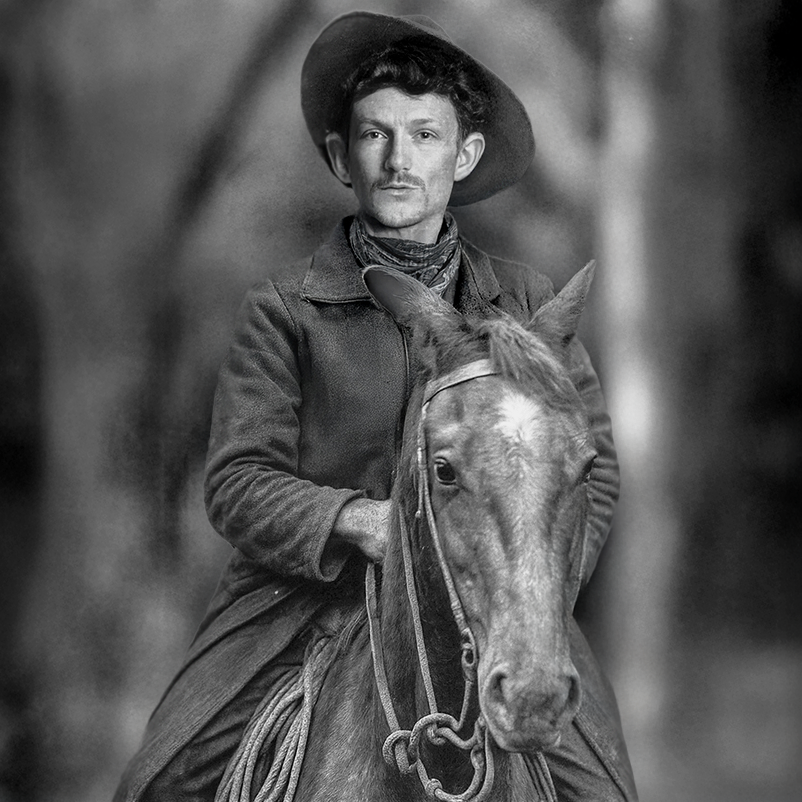
SAM STARR
Son of the feared Cherokee warrior Tom Starr, Sam inherited both his family’s feuds and their fierce reputation. At just twenty-five he wed Belle Starr, turning their Eufaula homestead into a sanctuary for fugitives and laying the foundation for Oklahoma’s outlaw dynasty.