
SAM STARR
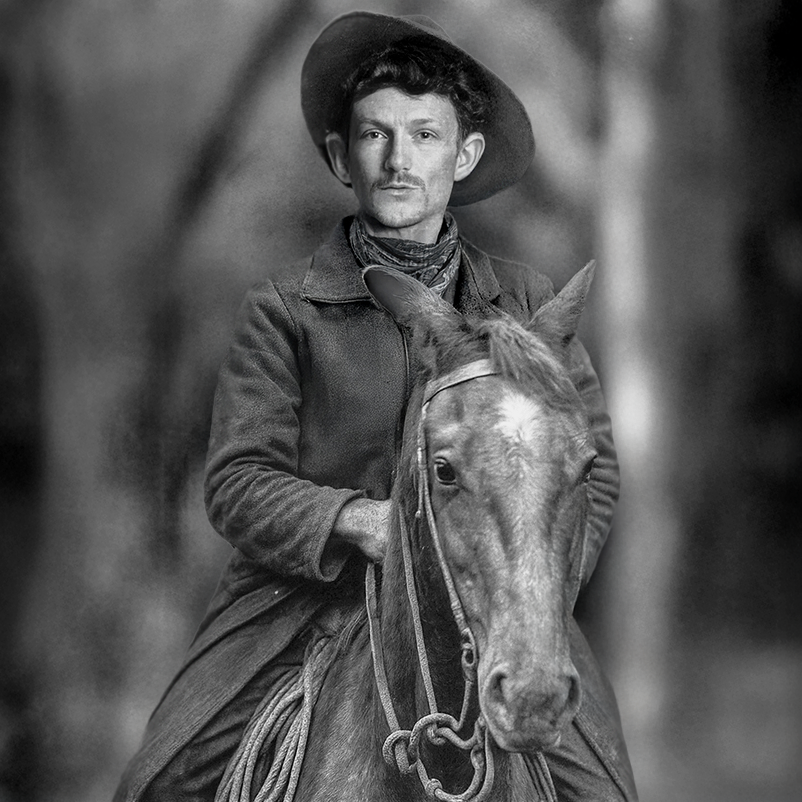
THE RISE AND FALL OF PONY BOY
Prologue: The Echo of a Feud
The air in the Cherokee Nation, just days after Christmas in 1886, was brittle and cold. Inside a rough-hewn building near Pryor Creek, the warmth of a communal gathering fought back against the winter chill. Men who shared bloodlines, history, and deep, searing grudges stood in uneasy proximity, the spirit of temporary truce thinning with each passing moment. Among them was Sam Starr, his lean frame coiled with a tension that was as much a part of him as his famous name. Across the room stood his cousin, Frank West, a US Indian Policeman—a representative of the very authority the Starr clan had spent a generation defying.
They were family. And in the world of the Starrs, that often made things worse, not better. The argument that erupted was likely over something trivial to an outsider—a horse, a debt, a perceived slight—but in that crowded room, it was the final spark on a decades-old pile of kindling. Words turned to threats, threats to action. The roar of gunfire shattered the fragile peace. When the smoke cleared, both men stumbled away, mortally wounded. Sam Starr, son of a martyr, nephew of an avenger, and husband of a legend, fell into the dirt, his life bleeding out onto the land his family had fought so violently to claim. His death was not at the hands of a U.S. Marshal or a pursuing posse. It was a death written in the oldest, darkest script of his family: a blood feud. It was a profoundly Starr way to die.
Born of Blood: The Starr Inheritance
Sam Starr was born around 1843, not into a family, but into a fortress of defiance. His father was the infamous Tom Starr—the “Devil’s own,” a man whose very name evoked fear throughout the Cherokee Nation and beyond. His mother was a Cherokee woman, whose name history has obscured, but from whom Sam inherited his tribal citizenship and his deep, visceral connection to the land. His childhood was not one of innocence but of instigation, a daily lesson in survival and suspicion.
The central, defining trauma of his life occurred on the morning of November 9, 1845. Sam was just a young boy, likely no more than two or three years old, when a mounted party loyal to the anti-Treaty Ross faction rode into his grandfather James Starr’s yard in the Flint District. James Starr, Tom’s father, was a pragmatic, well-off man, a slaveowner and a leader within the Treaty Party community. He was at a wash basin, cleaning his hands, while his teenage son, Buck (Sam’s uncle), held the water pitcher. There was no negotiation, no warrant, no ceremony. The riders opened fire. James Starr was killed where he stood. Buck, trying to flee, was shot down and would later die of his wounds. The assassins continued their bloody work that day, hunting down other Starr allies in a bloody settlement of political scores.
This massacre was the fiery baptism of the Starr family’s outright war against the Ross government. For young Sam, the lesson was absolute: authority was not to be trusted, the law was a weapon used by your enemies, and survival depended on strength, suspicion, and a willingness to retaliate with overwhelming force.
In the aftermath, Sam was raised under the formidable wing of his father, Tom Starr, in the rugged, rock-hewn sanctuary of the Cookson Hills. If his grandfather James had been a political leader, Tom was a force of pure, untamed nature. Tom Starr was a figure of terrifying reputation, a man known to kill with his fists, who waged a relentless war of vengeance against his father’s killers. Tom’s home was not a place of gentle learning; it was a crash course in frontier ruthlessness. It was here, in the isolated valleys and dense forests that would later be known as “Robbers’ Roost,” that Sam learned to track, to shoot, to ride, and to understand that in this hard land, a man’s will was the highest law. The U.S. Marshals in Fort Smith might have had the paper authority, but in the Cooksons, Tom Starr’s word was final.
The outbreak of the Civil War pulled the Cherokee Nation into a fresh hell of internal conflict. Stand Watie, a relative of the Starrs through the Treaty Party alliance, raised a regiment for the Confederacy. Young Sam Starr, coming of age in this cauldron, undoubtedly joined the cause. His war would not have been one of grand battles but of brutal guerrilla campaigning—ambushing supply trains, raiding Union sympathizers, and living in a state of constant, nerve-shredding alertness. This experience perfected the skills Tom Starr had taught him and seared into him a comfort with violence and life outside any formal structure. The war’s end left him not with a pension or honor, but with a hardened disposition and fewer legitimate prospects than ever. The Starr name was a brand that closed more doors than it opened.
The Gentleman Bandit and The Bandit Queen
In the years after the war, Sam fell in with his cousins, operating on the fringes of the law out of the Cookson Hills. They were not yet the legendary figures they would become; they were horse thieves and whiskey runners, talented and elusive but small-time. It was during this period that Sam frequently crossed paths with a woman who was a regular visitor to his father Tom’s home: Myra Maybelle Shirley, now Reed, a widow with a young daughter.
To view their union as a grand romance is to misunderstand both characters profoundly. Belle, nine years Sam’s senior, was a calculating strategist with a documented history of using relationships to advance her own status and security. She most likely saw in the young, impressionable Sam not just a handsome Cherokee man, but a key to legitimacy and protection within the powerful, feared Starr clan and the Cherokee Nation itself. This view of her motives is validated by the open disdain held for her by other Starr family members. Sam’s nephew, Henry Starr, found her crude and repulsive, always quick to clarify she was his aunt “by marriage only.” Tom Starr, the patriarch, tolerated her presence for his son’s sake but reportedly did not like her, distrusting her motives and her flashy, attention-seeking nature.
In 1880, they were married in a traditional Cherokee ceremony. For Belle, this was a strategic alliance. For Sam, it was the beginning of his transformation from a local troublemaker into a national icon of outlawry. Together, they established their kingdom. Sam and Belle moved near Briartown on communal tribal land. Sam had 52 acres called Younger’s Bend, named in honor of the Younger gang, their old friends from Missouri. This was near Eufaula, Oklahoma. The newlyweds cleared land and settled into a comfortable, two-story cabin at Younger’s Bend, on the Canadian River about 70 miles southwest of Fort Smith, Arkansas. The location was meticulously chosen: remote enough to be defensible, yet accessible to the network of outlaws who would become their guests and clients.
Younger’s Bend quickly became the most notorious outlaw sanctuary in the West. It was a place where U.S. Marshals feared to tread. Many fugitives, including Jesse James, often hid on the property, finding safe haven behind the formidable reputation of the Starr name and the rugged, easily defended terrain. The James-Younger gang, fresh from a botched robbery in Northfield, Minnesota, were known to recuperate there.
Sam and Belle formed an outlaw gang, rustling horses and bootlegging whiskey to Indians. Their operations were a model of frontier entrepreneurship. They would steal horses in Texas, run them through Indian Territory, and sell them in Arkansas, or vice versa, constantly exploiting the confused jurisdictions. They ran whiskey into the dry Indian Territory, a hugely profitable venture. But to label Sam the leader would be a mistake. The mastermind of this gang was Belle Starr. She was the accountant, the strategist, the negotiator who fenced stolen goods. Sam was the field general—respected, feared, and intimately knowledgeable of the land and its people. He was the muscle and the local guide; she was the brain and the publicist.
Flirting with the Hanging Judge
This double life inevitably led to confrontations with the infamous Judge Isaac C. Parker, the “Hanging Judge” of Fort Smith. In 1882, Sam and Belle’s luck ran thin. They were arrested by the legendary Deputy U.S. Marshal Bass Reeves and charged with horse theft.
Their trial in Fort Smith was a spectacle. The prosecution presented a strong case, but the Starrs had a secret weapon: Thomas H. Duval, a brilliant defense attorney and former Confederate general. Duval meticulously picked apart the prosecution’s evidence, highlighting inconsistencies and the unreliable nature of the witnesses, who were often criminals themselves. In a stunning verdict, the jury found them not guilty.
The acquittal only added to their legend. They had stood before the most feared judge in America and walked free. It seemed to confirm their invincibility. But the pressure was constant. The Starr home was raided multiple times by marshals, though they rarely found anything of consequence. Sam and Belle lived in a state of perpetual readiness, their wealth buried in secret caches, their guns always within reach.
The Feud: A Family Affair
While U.S. Marshals were a constant threat, the most dangerous conflicts for the Starrs always came from within their own world. The catalyst for Sam’s final crisis was not a federal lawman, but his own cousin, Frank West.
West was a Lighthorse Policeman, placing him on the opposite side of the legal fence from Sam. The bad blood between them allegedly began over a stolen horse—Frank’s stolen horse. Of which he accused Sam of stealing. Sam vehemetly denied this but could not convince Frank otherwise. The dispute festered, fueled by the Starr family’s propensity for holding grudges. It was a classic feud, echoing the one that had claimed Sam’s grandfather.
The tension exploded in a preliminary skirmish. Sam, never one to back down, confronted West and shot him, wounding his cousin but failing to kill him. This act ensured that the feud would now be a fight to the death. Frank West, humiliated and wounded, was now doubly motivated by personal vendetta and professional duty. The stage was set for a final, tragic confrontation.
The Last Dance: A Coda to Violence
Sam Starr attended the Christmas dance at Aunt Lucy Surratt’s house on Emachaya Creek with a sense of obligation. These social gatherings, with their veneer of civility, were Belle’s terrain. She thrived in the limelight, and he, a man shaped by the isolated valleys of Youngers Bend, endured them as her escort, a silent sentinel to her performance. When their hostess persuaded Belle to play the pedal organ, Sam seized the opportunity to escape the crowded interior. He moved outside into the December night, joining the cluster of men drawn to the straightforward warmth of a yard fire.
The atmosphere was one of casual camaraderie until a new presence was pulled into the firelight. It was Frank West. The recent history between the two men was a tinderbox: Because Sam had already shot and wounded his cousin in a prior confrontation, the warrant West carried was an open provocation. There was no need for posturing or drawn-out insults. The recognition was instantaneous and absolute. For Sam, this was not a chance meeting but the anticipated retaliation. For West, it was a final reckoning.
The exchange was likely brief—a few sharp words that served merely as a formality, the necessary prelude to an action both knew was inevitable. The Starr family’s legacy of conflict, decades in the making, demanded its due.
Sam drew and fired first, his shot striking a mortal blow. But West, sustained by a final reserve of will, returned fire as he fell. The bullet passed through Sam’s body before striking a twelve-year-old boy standing nearby—a stark and sobering coda to their violence.
The music inside ceased. Belle emerged from the house into a scene of chaos, finding her husband, collapsing. She held him as he died, her grief erupting into curses aimed at West, who lay dying a few feet away. The festive night had concluded in its starkest possible terms.
In the pragmatic rituals of the territory, the aftermath was swift. One wagon carried West’s body to his family; another transported Sam Starr back to the land his family had fought so violently to claim. His death was not an ambush by authorities but a personal, familial end—a conclusion written in a language of vengeance he had spoken fluently since boyhood.
Epilogue: The Legacy of the Pony Boy
Sam Starr was buried near Younger’s Bend. His death left a void that Belle tried to fill, crafting her own mythos as the “Bandit Queen” until her own murder a few years later. But Sam’s true legacy was not his own legend; it was the dynasty of outlaws he left behind.
He was often overshadowed by the titanic figures in his life: his avenging father Tom, his infamous wife Belle, and his spectacularly notorious nephew, Henry Starr, who would go on to become the most prolific bank robber in American history. Compared to them, Sam’s record can seem almost modest—horse theft and bootlegging, not grand train robberies. A closer examination of his career reveals a crucial distinction: Sam Starr was perhaps less a master outlaw and more a product of his infamous environment. He was repeatedly caught for the simplest frontier crimes—horse thievery and whiskey running—offenses that the most savvy criminals knew how to avoid. Furthermore, his final act was one of fatal impulsivity, not calculated strategy: walking into a social gathering where he knew his enemy, a trained U.S. Indian Policeman, would be present, and allowing a heated argument to escalate into a fatal gunfight. This was not the behavior of a cold, professional criminal; it was the short-fused reaction of a man forever living in the shadow of a legacy he couldn’t quite live up to.
He was a man of slight build, not a hulking brute. He was even nicknamed “Pony Boy” for his propensity to ride smaller, quicker horses, a detail that speaks to a practical cunning rather than overwhelming force. He lacked the theatrical villainy of a Jesse James or the ruthless efficiency of a John Wesley Hardin.
Perhaps Sam Starr was not the natural, fearsome badass his father was. Perhaps he was something more complex and more human: a man trying to live up to an impossible inheritance. He was born into a name that demanded defiance and schooled in violence from his first memory. His every action—aligning with Belle, building Younger’s Bend, facing down Judge Parker, and finally, dying in a hail of gunfire against his cousin—can be seen as the efforts of a man desperately trying to prove he was worthy of the Starr name. He may not have been born the baddest man in the Territory, but he spent his life trying to become him, to make his martyred grandfather and his avenging father proud.
In the end, he succeeded in the only way the Starr family would have recognized: he died violently, by the gun, on his own terms, and forever cemented his place in the dark mythology of the American outlaw. Yet, his story is ultimately a tragic one of squandered potential. One cannot help but wonder if, born into a different family under a different name, Sam Starr might have lived a remarkably different life. The same intelligence and loyalty he devoted to his clan’s bloody code could have made him a respected lawyer, a shrewd businessman, or a devoted family man. He was not born a monster; he was forged into one by the relentless expectations of his name and the brutal circumstances of his birth, a testament to the fact that sometimes, the heaviest chains are not made of iron, but of legacy.
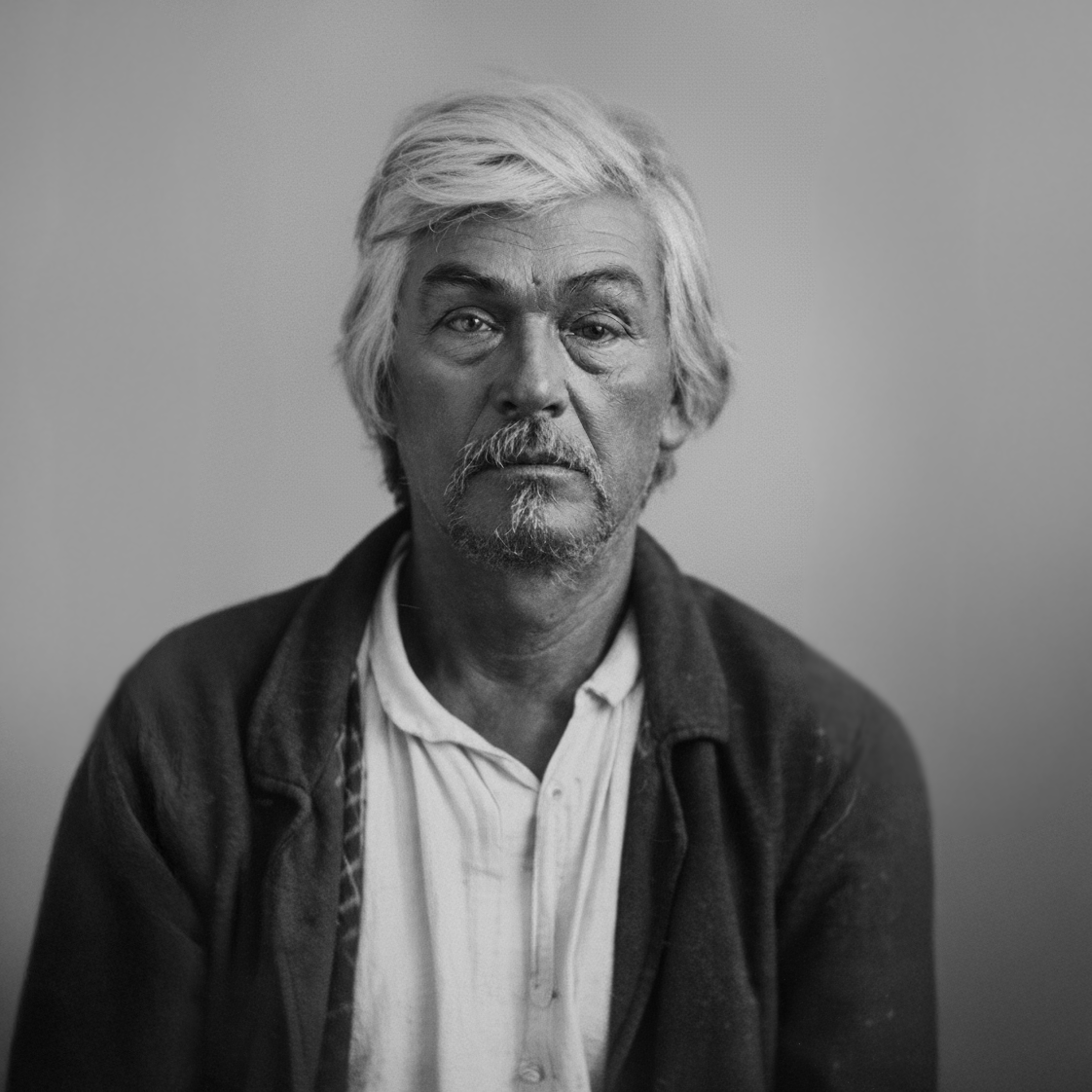
TOM STARR
A towering figure of the Cherokee frontier, Tom Starr earned a reputation as a relentless fighter during the bloody feud that tore his Nation apart. Feared and revered, his ruthless code of loyalty and vengeance birthed Oklahoma’s most infamous outlaw bloodline.
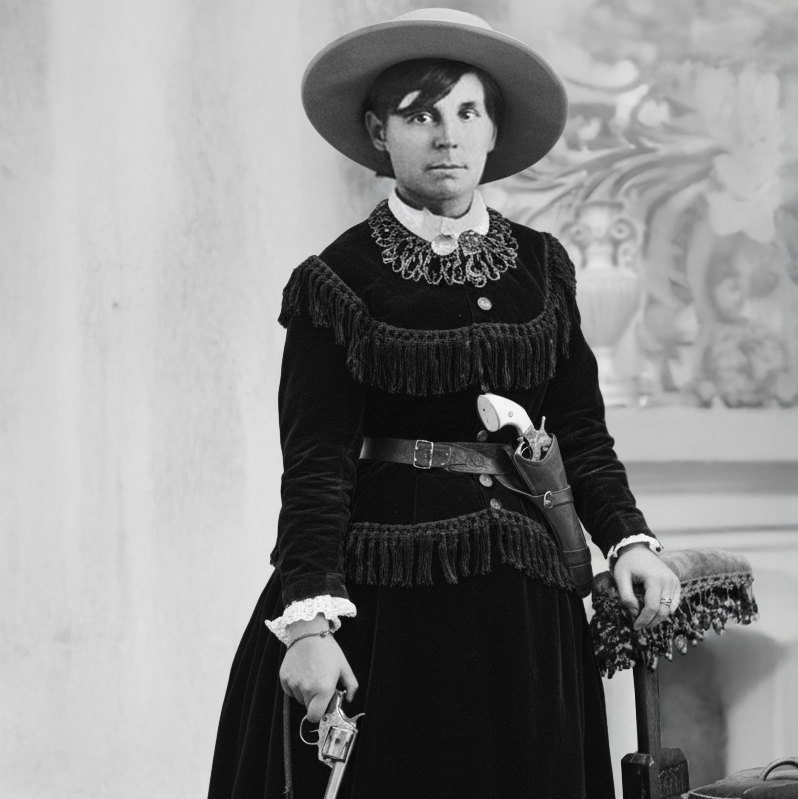
BELLE STARR
Belle Starr, the famed “Bandit Queen,” rose from cultured beginnings to command Younger’s Bend alongside Sam Starr. Witty, fearless, and cunning, she turned outlaw Oklahoma into her stage, mastering survival while building the enduring legend of America’s notorious outlaw woman.
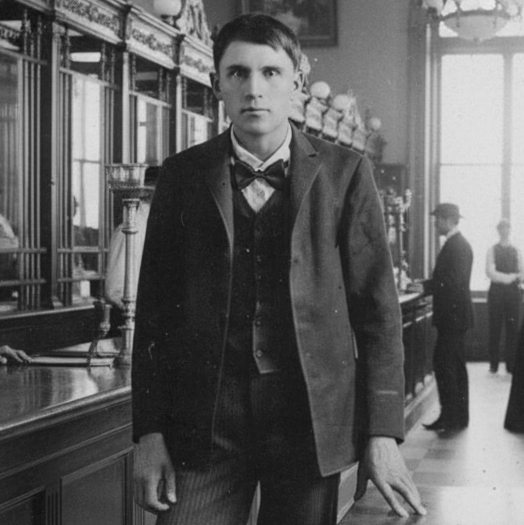
HENRY STARR
Born in 1873 near Fort Gibson, Henry Starr carried his uncle’s violent legacy into a new century. He masterminded audacious bank robberies—fourteen in five months—earning both presidential pardons and infamy as the last great outlaw of Oklahoma’s turbulent frontier.