
THE STARR FAMILY: THE UNAVOIDABLE VERDICT
PROLOGUE
Spend any length of time in Eastern Oklahoma and a distinct pattern emerges—a region defined by its own brand of defiance, where the pursuit of calm collides with an instinctive resistance to authority. Nowhere is this more evident than in Tulsa, a city whose local headlines embody that spirit: crime stories that rise above simple reporting to become raw public spectacle. These are not quiet offenses but theatrical displays of defiance—a man leading police on a high-speed chase with his children in the backseat, a domestic argument turned machete fight, or a feud settled with Molotov cocktails. These are real Tulsa stories—each showing a blatant disregard for the ordinary.
The pageantry on display is not Tulsa’s alone; it is an inheritance from a state whose history reads like a primer on American lawlessness. The state’s history is a foundational text of American lawlessness— the day Bonnie and Clyde gunned down Constable William Campbell in Commerce, the ferocious Battle of Ingalls with the Doolin–Dalton Gang, and the countless treasure hunters drawn by the legend of Jesse James’s hidden treasure.” It is the birthplace of icons of disorder: Machine Gun Kelly, who launched his infamous career with the kidnapping of an Oklahoma oilman; and Charles “Pretty Boy” Floyd, Public Enemy Number One, who once rained Tommy gun fire upon police and led them on a frantic chase through a maze of Tulsa streets before eventually getting away.
This list of infamy forms an ornate historical tapestry.
Yet from its many threads, one family’s narrative emerges not as a mere chapter, but as a genesis story. Through their choices, feuds, and outright defiance, their influence echoed across decades, infecting every gang that followed and cementing the region’s most enduring legend. Their saga stands apart: a foundational epic in the annals of the American outlaw West, and the bedrock upon which Oklahoma’s spirit of defiance was built.
They were the Starr family.
Their story begins not with a bank robbery, but with a patriarch’s fateful choice. Caleb Starr, a white man married into Cherokee royalty, became a key architect of the Treaty of New Echota—the document that authorized the Trail of Tears. That single act placed his family on the losing side of a brutal civil war within the Cherokee Nation, culminating in assassination: his son James was gunned down in 1845 while washing his hands in his own yard. That murder forged James’s son, Tom Starr, into a figure of pure vengeance. Hunting down his father’s killers one by one, Tom built a legend so fearsome that his homestead just north of the Canadian River near Eufaula became more than a home, it became a fortress and sanctuary—the most notorious outlaw haven the West has ever seen, where U.S. Marshals feared to tread, and where icons like Jesse James, Rufus Buck, and Cole Younger found safe harbor, supplies, and plotting partners.
Herein lies the crucial, unmatched ingredient in Oklahoma’s outlaw recipe. Other states had criminals; Oklahoma had a culture—one cultivated by Tom Starr. The Starr name grew synonymous with a life beyond the law, a defiant autonomy operating by its own rules. Tom Starr did not merely commit crimes; he engineered an entire ecosystem for them. He transformed Indian Territory into a destination for those fleeing the long arm of the law, offering not just refuge, but a legacy.
This culture didn’t die with the horse and saddle. It evolved. The children who grew up hearing stories of the Starrs, the Daltons, and Jesse James didn’t become horseback bandits; they picked up Tommy guns and became the next generation of gangsters.
The Unmatched Scale of Oklahoma’s Outlawry
The sheer concentration of infamous figures spawned by the Starrs in Oklahoma is staggering and utterly unmatched. To understand this, we must move beyond romanticized legends and look at the cold, hard calculus of criminal notoriety. We are counting individuals who were either native to the soil of Oklahoma (Indian Territory) or who embedded themselves in its ecosystem of lawlessness for a significant portion of their careers, using it as a base of operations, a sanctuary, or a primary hunting ground.
Consider the numbers with this detailed lens:
Wyoming: Home to iconic lawmen like Wild Bill Hickok (though his tenure as marshal was brief) and Buffalo Bill Cody. Its most famous outlaw, Butch Cassidy, was certainly active there with the Wild Bunch, but the state’s role was more as a transient route for heists. During the Prohibition era, Joe Roma’s Denver network had only limited activity in the state, consisting of a handful of men moving liquor through Cheyenne and Sheridan. A total count of notable outlaw or organized criminal figures with ties to Wyoming would be approximately 8–9.
Arizona: Synonymous with the Gunfight at the O.K. Corral, but that was a single, albeit famous, event. Its roster includes the Clanton Gang (Ike, Billy, Phineas), the McLaury brothers (Frank and Tom), and Johnny Ringo. During the Prohibition era, Joe Bonanno’s early network in Tucson oversaw modest smuggling operations, with small independent runners operating near Nogales, Bisbee, and Yuma. A total count of recognized outlaws and Prohibition-era figures based primarily in Arizona would be approximately 9–10.
Texas: Produced iconic names like Sam Bass, John Wesley Hardin, and Ben Thompson. However, many of its most famous outlaws, like Bonnie and Clyde, were products of the Depression era and were multi-state spree killers, not embedded in a single Texas-specific culture. During the Prohibition era, Ben “King of the Bootleggers” Kerr and the Maceo Brothers led large-scale bootlegging and gambling operations across Dallas–Fort Worth and Galveston, supported by dozens of local distributors and smugglers. A total estimate of major Texas-based outlaw and organized-crime figures across both eras would be approximately 12–14.
New Mexico: The domain of Billy the Kid (Henry McCarty) and his associates in the Lincoln County War, including figures like Dave Rudabaugh and John Middleton. The territory’s outlaw population was significant but centered on one primary conflict. During the Prohibition era, operations were minimal and largely confined to local smugglers such as Rattlesnake Bill, who moved small shipments of Mexican liquor through the El Paso–Las Cruces corridor. A total estimate of New Mexico-based outlaws and Prohibition-era figures would be approximately 8–9.
Colorado: A hotbed of activity due to mining camps. It saw the likes of the Soapy Smith gang in Creede (a transient group), the ruthless Felipe Espinosa, and was a frequent operating area for the Wild Bunch. During the Prohibition era, Joe “Little Caesar” Roma ran Denver’s organized liquor trade, later inherited by the Smaldone Brothers, with combined operations across bootlegging, gambling, and racketeering. A total count of significant criminal figures associated with Colorado through both the outlaw and Prohibition periods would be approximately 14–16.
Now, let’s tally Oklahoma’s infamy, not just by gang names, but by counting the individuals who made this ground their own:
Oklahoma Outlaws & Their Affiliations
The Golden Age (Territory Days to Statehood)
- Tom Starr (Starr Clan)
- Sam Starr (Starr Clan)
- Belle Starr (Starr Clan/Connector)
- Henry Starr (Starr Clan, later solo)
- Grat Dalton (Dalton Gang)
- Bob Dalton (Dalton Gang)
- Emmett Dalton (Dalton Gang)
- Bill Doolin (Doolin-Dalton Gang)
- Bill Dalton (Doolin-Dalton Gang)
- Bittercreek Newcomb (Doolin-Dalton Gang)
- Charlie Pierce (Doolin-Dalton Gang)
- Dynamite Dick Clifton (Doolin-Dalton Gang)
- Tulsa Jack Blake (Doolin-Dalton Gang)
- Red Buck Waightman (Doolin-Dalton Gang)
- Dan Clifton (Doolin-Dalton Gang)
- Bill Cook (Cook Gang)
- Jim Cook (Cook Gang)
- Cherokee Bill (Crawford Goldsby, Cook Gang)
- Skeeter Baldwin (Cook Gang associate)
- Henry Munson (Cook Gang associate)
- Ned Christie (Cherokee Renegade, solo)
- Rufus Buck (Rufus Buck Gang)
- Lewis Davis (Rufus Buck Gang)
- Lucky Davis (Rufus Buck Gang)
- Maoma July (Rufus Buck Gang)
- Sam Sampson (Rufus Buck Gang)
- Al Jennings (Jennings Gang)
- Frank Jennings (Jennings Gang)
- Ed Jennings (Jennings Gang)
- Jesse James (James-Younger Gang)
- Frank James (James-Younger Gang)
- Cole Younger (James-Younger Gang)
- Jim Younger (James-Younger Gang)
- Bob Younger (James-Younger Gang)
- John Younger (James-Younger Gang)
The Transitional Era (Statehood to Prohibition)
- Al Spencer (Al Spencer Gang)
- Earl Thayer (Al Spencer Gang)
- Buck Fitzgerald (Al Spencer Gang)
The Prohibition Era (1920s-1940s)
- Pretty Boy Floyd (Charles Arthur Floyd, Barker-Karpis associate/solo)
- Ma Barker (Barker-Karpis Gang)
- Arthur “Doc” Barker (Barker-Karpis Gang)
- Freddie Barker (Barker-Karpis Gang)
- Alvin Karpis (Barker-Karpis Gang)
- Machine Gun Kelly (George Kelly Barnes, Kelly Gang)
- Kathryn Kelly (Kelly Gang)
- Volney Davis (Barker-Karpis Gang)
- Frank Nash (solo bank robber)
- Wilbur Underhill (“The Tri-State Terror,” solo/Barker-Karpis associate)
- George “Baby Face” Nelson (Dillinger Gang, associate of Oklahoma criminals)
- Bonnie Parker (Barrow Gang)
- Clyde Barrow (Barrow Gang)
This curated list of 51 named, historically significant figures—each either native to the soil or deeply embedded in its criminal underworld—illustrates a density of homegrown talent and imported legend unmatched in American history. This concentration cannot be explained by geography or economics alone, but by a perfect storm of jurisdictional chaos and deliberate cultural architecture. Where other states offered mere hideouts, Oklahoma provided a de facto sovereign sanctuary system, and Tom Starr proved to be its brilliant and ruthless administrator.
The foundation of this system was laid before statehood, when the region was Indian Territory—a patchwork of sovereign tribal nations. U.S. Marshals possessed nominal authority to pursue fugitives across its borders, but exercising it was a diplomatic and physical minefield. They operated as foreign agents on land governed by tribal law and patrolled by Lighthorse police. A marshal chasing a horse thief onto Cherokee land risked confrontation not only with his quarry, but with well-armed citizens and officials fiercely protective of their sovereignty and deeply distrustful of white authority. This created a massive, legally-mandated buffer zone for outlaws.
The legendary status of Deputy U.S. Marshal Bass Reeves underscores this point. As one of the first Black marshals west of the Mississippi, he operated with a unique advantage. Indigenous nations, also suffering under federal oppression, often perceived Reeves not merely as a government agent, but as a fellow man of color navigating a hostile system. This granted him a degree of access, intelligence, and safe passage seldom afforded his white counterparts. That such a specific and rare skillset was required for effective policing highlights the territory’s inherent impenetrability. For an outlaw, crossing into Indian Territory was like passing through a magical barrier; pursuing posses would often halt at the border.
It is within this framework that the Starr family rose to power. Specifially, Tom Starr. Tom Starr’s genius lay in exploiting this chaos to its absolute limit. His stronghold in the Canadian District was more than a simple homestead; it was a fortified enclave strategically nested within this protective sovereign shield. The terrain itself was a natural fortress—a labyrinth of thickly wooded hollows and steep ridges that provided a physical manifestation of its legal inaccessibility. Any U.S. Marshal seeking to approach was compelled to first navigate a diplomatic gauntlet with tribal authorities, effectively announcing his intentions and ceding any element of surprise long before entering the Starr domain. This was not merely a hideout; it was a sovereign redoubt within a sovereign nation.
But Starr’s true innovation was cultural. An invitation to his table was a coveted badge of honor, transforming practical sanctuary into a pilgrimage. For figures like the James-Younger gang, it connected them to a legacy of Native defiance against the U.S. government—a cause that resonated with their own Confederate allegiances. Younger’s Bend functioned as a criminal stock exchange and intelligence hub, where gangs from across the West could forge alliances, plot jobs, and share information on lawman movements. Starr was the nexus. He didn’t just hide criminals; he connected them, fostering a self-perpetuating network protected by a vast legal buffer.
Thus, the question shifts from why Oklahoma produced so many outlaws to how any other outcome was ever possible. The U.S. government, through removal and treaty, inadvertently architected the ultimate sanctuary jurisdiction. Into this vacuum stepped Tom Starr, who perfected it. He curated a tradition, franchised a brand of defiance, and established a viable alternative society. The generations of criminals that followed—from the Doolin-Dalton Gang to Pretty Boy Floyd—were not independent actors. They were heirs, beneficiaries of a pre-existing infrastructure both physical and cultural. The evidence leads to an inescapable conclusion: Oklahoma’s identity is fundamentally woven with its outlaw legacy, not as a footnote, but as its foundational narrative. The West had outlaws; Oklahoma had an institution.
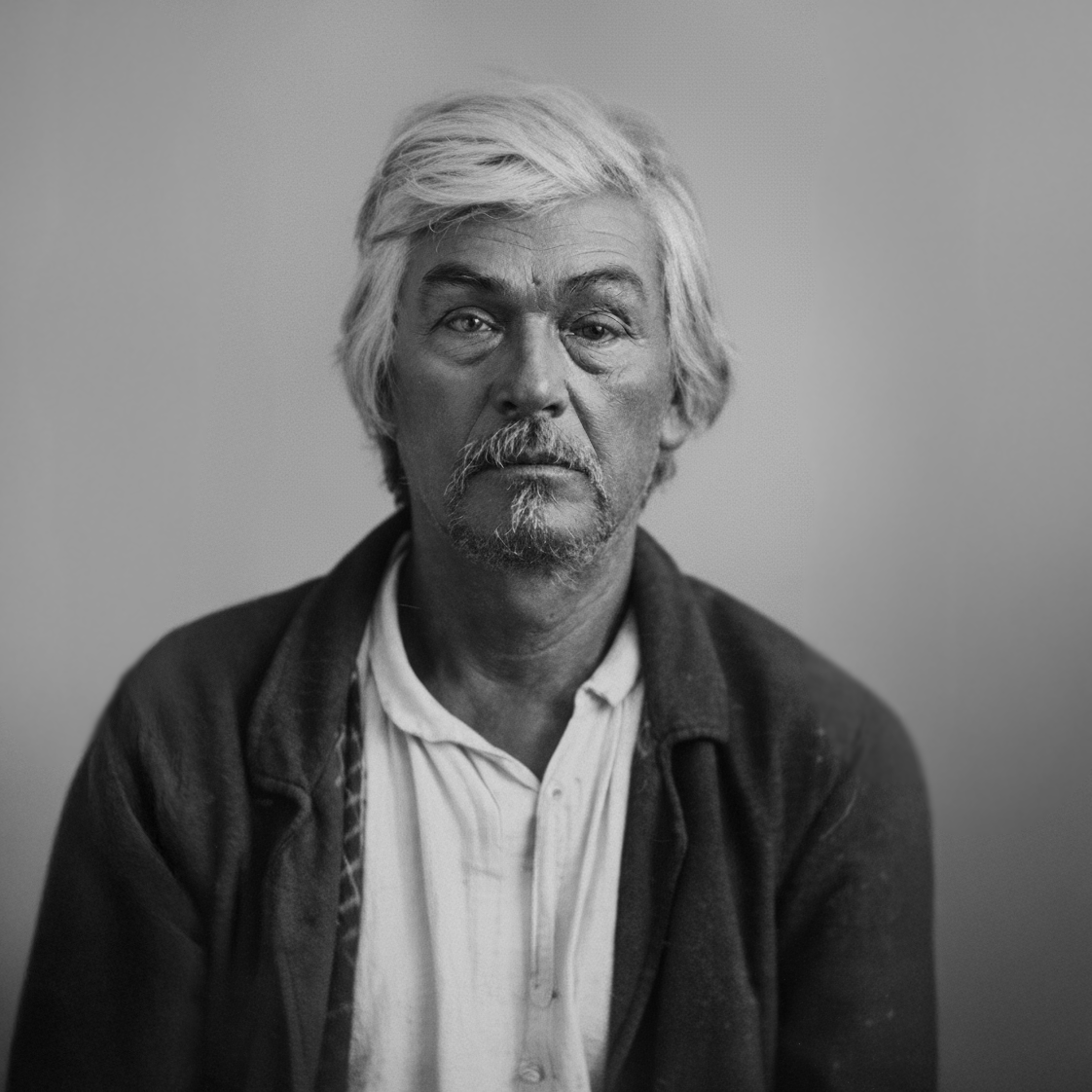
TOM STARR
A towering figure of the Cherokee frontier, Tom Starr earned a reputation as a relentless fighter during the bloody feud that tore his Nation apart. Feared and revered, his ruthless code of loyalty and vengeance birthed Oklahoma’s most infamous outlaw bloodline.
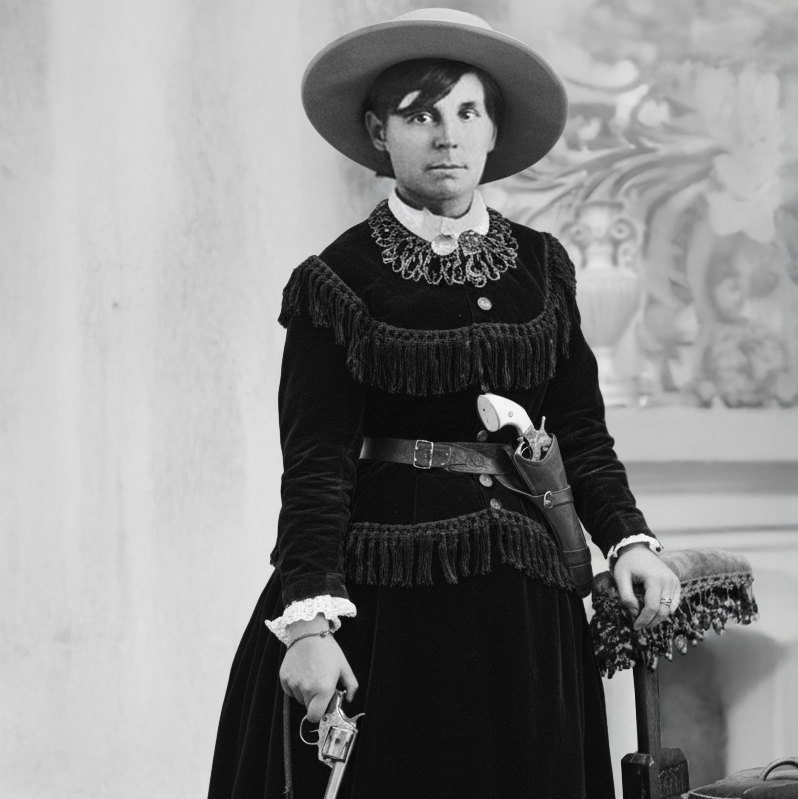
BELLE STARR
Belle Starr, the famed “Bandit Queen,” rose from cultured beginnings to command Younger’s Bend alongside Sam Starr. Witty, fearless, and cunning, she turned outlaw Oklahoma into her stage, mastering survival while building the enduring legend of America’s notorious outlaw woman.
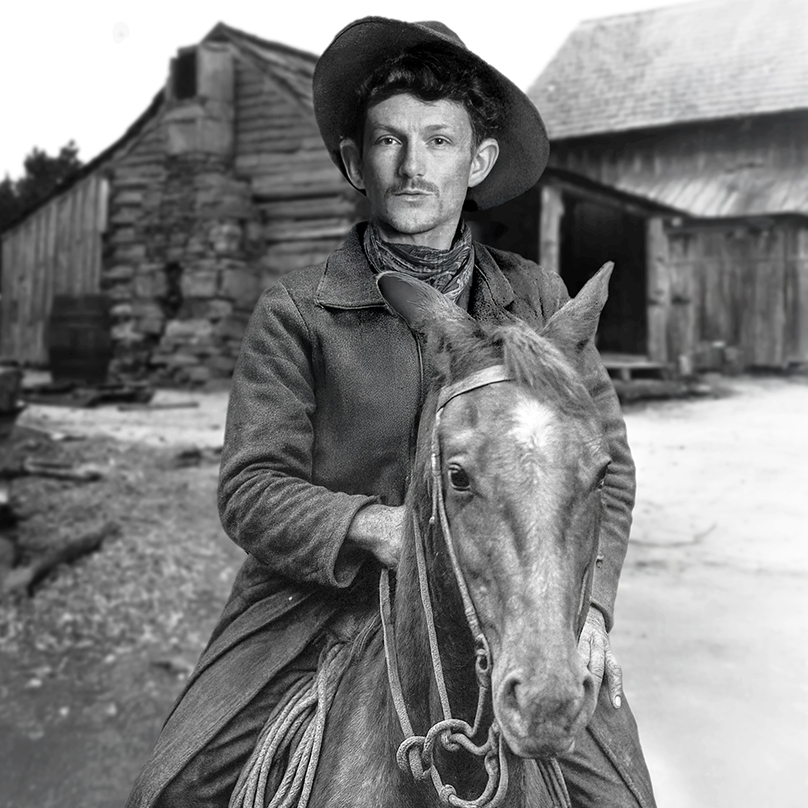
SAM STARR
Son of the feared Cherokee warrior Tom Starr, Sam inherited both his family’s feuds and their fierce reputation. At just twenty-five he wed Belle Starr, turning their Eufaula homestead into a sanctuary for fugitives and laying the foundation for Oklahoma’s outlaw dynasty.
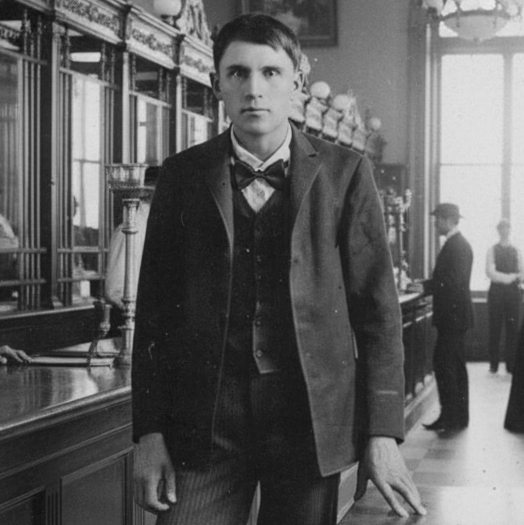
HENRY STARR
Born in 1873 near Fort Gibson, Henry Starr carried his uncle’s violent legacy into a new century. He masterminded audacious bank robberies—fourteen in five months—earning both presidential pardons and infamy as the last great outlaw of Oklahoma’s turbulent frontier.