
BELLE STARR
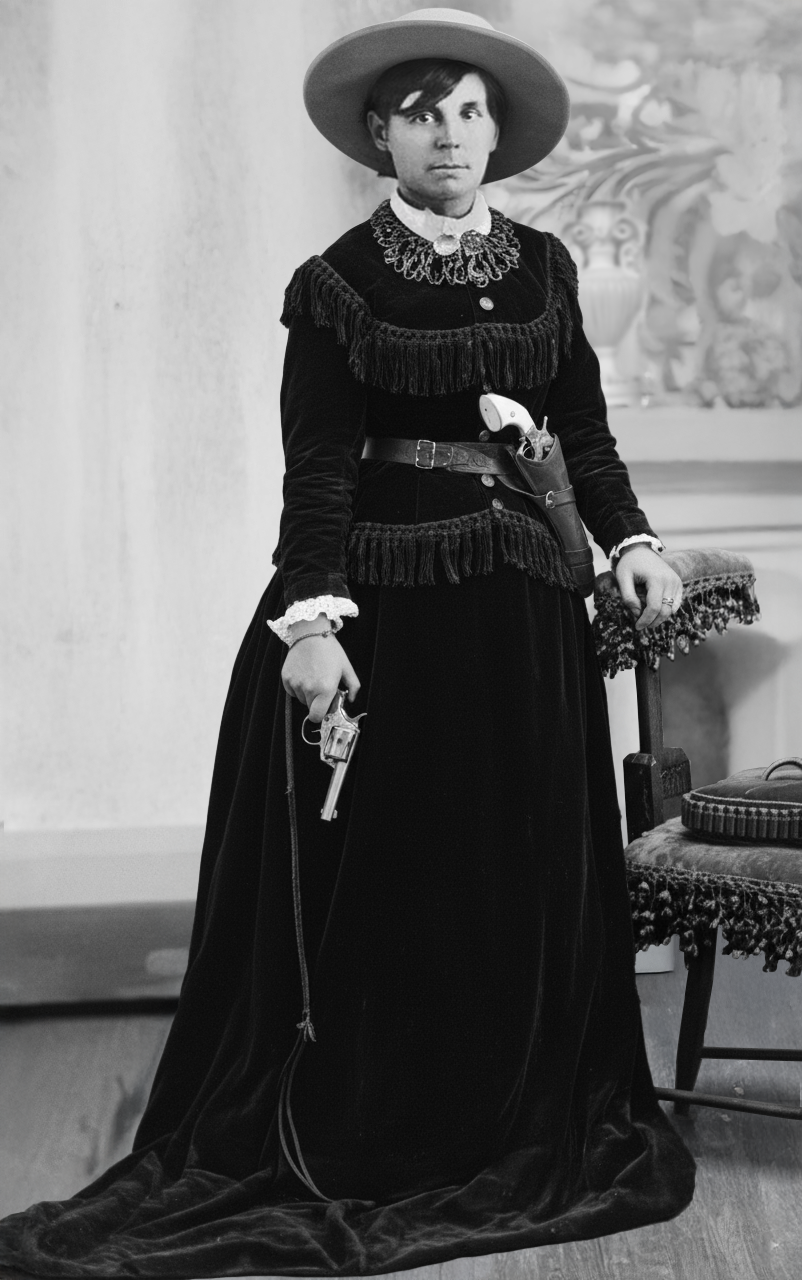
THE BANDIT QUEEN: VELVET AND LEAD
Introduction
Myra Maybelle “Belle” Shirley was born on February 5, 1848, in Jasper County near Carthage, Missouri, to John Shirley and Elizabeth “Eliza” Pennington Shirley. Contemporary descriptions and later genealogical reviews agree that the family rose from modest means to local prosperity in the decade before the Civil War. By 1860, John Shirley appeared in records as a prosperous hotel or inn keeper in Carthage, his estate valued at a respectable $10,000. The household included multiple children, with Belle listed as “Myra,” then twelve years old.
Later lore often styled John Shirley as a judge, a title that would imply social standing and explain his ability to provide an extravagant education for his daughter. However, the preponderance of source materials, including census records and family accounts, consistently depict him as an innkeeper and businessman whose property—an inn, tavern, and livery stable—formed the base of the family’s pre-war standing. It was this environment, not a courtroom, that shaped Belle’s youth; a world of travelers, traders, and the rough crowd that inevitably gathered around a stable, including bushwhackers and horse thieves who used his premises as a hideout.
Eliza’s background is noted as Virginian, and one source definitively traces her maternal line to the Hatfields of The Hatfields and McCoy’s feud fame—a lineage that could be used to explain Belle’s own fiery and implacable disposition.
Belle’s schooling was indeed unusual for the time and place. She attended the Carthage Female Academy, where she studied music, becoming an accomplished pianist, and excelled in classical subjects including Latin and Greek. This training gave her a poise and cultural polish later remarked upon by both admirers and detractors, who noted her ability to converse intelligently and command a room. Yet, this education never quite took root in the intended way. Her interests remained firmly outdoors. Under the tutelage of her older half-brother, John A. M. “Bud” Shirley, she learned to ride with expert skill and shoot with deadly accuracy, preferring the company of horses and the feel of a pistol to the finery of the academy.
Guerrilla Warfare
The Civil War and its intimate, brutal border violence shattered the Shirley world. Missouri’s guerrilla conflict was a vicious, neighbor-against-neighbor affair, and the Shirleys—staunch Confederate sympathizers like many in Carthage—were drawn into its orbit. This was the world that shaped the young Belle, and its most potent symbol was William Clarke Quantrill.
Quantrill’s Raiders were not a formal Confederate unit but a band of pro-Confederate partisan rangers, or “bushwhackers,” who operated with savage independence along the Kansas-Missouri border. They formed in response to the equally brutal tactics of Union Jayhawkers and the escalating violence of “Bleeding Kansas.” Under Quantrill, a former schoolteacher turned ruthless leader, they became infamous for their irregular warfare, ambushes, and brutal reprisals against Union soldiers and sympathizers alike. Their most notorious act was the 1863 Lawrence Massacre, where they killed nearly 200 men and boys and burned much of the town.
Belle’s older half-brother, John A. M. “Bud” Shirley, idolized this cause. He led his own small band of bushwhackers before becoming a scout for Quantrill himself. Through Bud, the Shirley family property became a known haven for these guerrillas. It was in this environment that a young Belle, eschewing the piano for the stable, learned to ride and shoot alongside her brother and his comrades. It was here she first met figures like Cole Younger and the James brothers, and where a young Jim Reed, another Quantrill man, developed an early crush on the spirited, sharp-shooting girl.
The war’s shadow fell directly on the family in the summer of 1863. Union troops surrounded a house in Sarcoxie where Bud was visiting a Confederate family. As he attempted to escape, he was shot and killed. The legend, fervently repeated in later accounts, claims that a vengeful Belle, then fifteen, and her mother Eliza, their Hatfield blood boiling, armed themselves—Belle with two pistols, Eliza with a rifle—and rode to Sarcoxie. Belle allegedly vowed to “kill the dirty Yankee that killed Bud,” and though they failed to find the specific soldier, she promised a lasting war against the Union. While the absolute truth of this dramatic ride is tangled in myth, it perfectly captures the rage and trauma that defined the family’s wartime experience.
The war’s end brought not peace, but economic ruin. John Shirley’s businesses—the inn, tavern, and livery stable—had been destroyed, likely burned in the raids that left Carthage in ashes. A once-prosperous man, he fell on desperate financial times. Facing destitution and a landscape haunted by the memory of his dead son, Shirley made a drastic decision. Around 1864, he left Missouri for Scyene, Texas, southeast of Dallas, taking his wife Eliza and daughter Belle to start anew. Some accounts suggest he left behind older children from his previous marriages, focusing his resources on this diminished nuclear family in hopes of a cleaner slate. He put Belle back in school, a final attempt to steer his headstrong daughter toward the respectable life he still believed was possible.
In post-war Texas, the Shirleys’ farm became a natural refuge for former Confederates and guerrillas on the run, including Jesse James and his brother Frank. It was also a destination for their old acquaintances, including William Quantrill himself, who reportedly visited the Shirleys in Texas before his death in 1865. Here, Belle reconnected with Jim Reed, the former Quantrill raider who had known her since she was a girl.
Despite her father’s well-founded disapproval—he considered Reed a “no-good horse thief”—the romance blossomed. In 1866, the eighteen-year-old Belle married him. Initially, Reed attempted a straight life as a saddle maker, and for a brief period, things were idyllic. Their daughter, Rosie Lee “Pearl,” was born in 1868. But Reed’s restlessness and outlaw instincts prevailed. He fell in with Tom Starr, a formidable Cherokee outlaw known for whiskey smuggling and cattle rustling in the Indian Territory. Reed’s criminal activity escalated to stagecoach holdups and murder, and warrants were issued for his arrest.
Seeking refuge from the law and perhaps from the disapproving eye of her father, the Reeds fled to California around 1869. Their son, James Edwin “Eddie,” was born there in 1871. But Reed’s troubles followed him; he was suspected of counterfeiting and wanted for murder in Missouri. The family returned to Texas, where Belle, now with two young children and increasingly disillusioned with her husband’s life, left him and returned to her parents’ home. This period marks the true beginning of Belle’s own criminal associations; she was no longer just an outlaw’s wife but an active participant in his world, allegedly operating a stable for selling his stolen horses.
In 1874, while visiting Belle and the children, Jim Reed joined accomplices in robbing the San Antonio stage. Months later, his life of violence caught up with him; he was shot and killed near Paris, Texas, by a deputized former associate. Belle, still in her mid-twenties, was a widow with two children. She was known locally as an outlaw’s wife, but her own infamy was yet to be forged.
Starr Struck
After Reed’s death, Belle’s life intersected more deeply with outlaw circuits, though the sources caution against the most sensational claims. While later myth-making would exaggerate her personal role in grand robberies, her proximity and connections were undeniable.
The most critical tie ran through the Starr family of the Cherokee Nation. Before his death, Jim Reed had already “taken up with Tom Starr,” a figure whose name carried immense weight and fear in the Territory. Tom Starr was a force of nature; a fierce advocate for the Southern cause who, after the war, wielded such power through violence that the Cherokee Nation was forced to sign a treaty with him, paying him a large sum and granting him a vast, remote tract of land on a bend of the Canadian River. This homestead was in a canyon with a one-way-in, one-way-out access, a natural fortress that made him practically untouchable and a perfect refuge for outlaws. U.S. marshals were known to be wary of approaching without notice, for fear of never returning.
It was within this powerful, protected clan that Belle found her destiny. She had likely met Sam Starr, Tom’s son, during visits to Reed’s hideouts in the early 1870s. She saw firsthand the power, the royalty-like status, and the protection the Starr name afforded. She was enamored with them, and in 1880, she married Sam Starr, a man ten years her junior, and entered fully into their world.
The marriage to Sam was a strategic and symbolic ascent. Belle moved onto the Starr land at Youngers Bend—a place many say paid homage to Cole Younger, though evidence suggests the name predated her arrival. This remote homestead became the physical and symbolic stage for the final act of her life.
Here, Belle and Sam formed their own gang, diving deep into a life of cattle rustling, horse theft, and bootlegging. Hanging out with the Starrs meant operating within a family business built on extortion and theft. Belle, with her intelligence, education, and attitude, was likely more of a strategist than participant. She finally had the agency and power she craved, vowing never to be hard up for money again. She crafted her image meticulously: photographed in tailored riding dresses, twin pistols on her hips, a plumed man’s hat on her head. She was self-possessed, defiant, and played the role of the Bandit Queen for the newspaper reporters who began to seek her out.
In 1882, the law finally caught them. Neighbors’ horses were found in their corral and had been sold. Arrested by U.S. marshals, Belle and Sam were tried before Judge Isaac C. Parker, the “Hanging Judge” of Fort Smith. Both were convicted of horse theft and sentenced to a year in the Detroit House of Corrections in Michigan. The experience was transformative; Belle was a model prisoner, earning the respect of the matron, while Sam was assigned to hard labor. Released after nine months, they returned to the Territory, their notoriety magnified. Belle’s comment to a Dallas reporter upon her return said it all: “I am a friend to any brave and gallant outlaw.” She had fully embraced the persona.
Sam Starr’s Final Curtain
To understand this final, tragic act, one must first know the players and the grudges that set the stage. This is a story that could only belong to Belle Starr and her thirst for the dramatic.
Frank West
While U.S. Marshals were a constant menace, this conflict for the Starrs festered in their own world. The catalyst for Sam’s demise was not a federal lawman, but his own cousin, Frank West.
As a Lighthorse Policeman, Frank stood on the opposite side of the law from Sam. The bad blood between them ignited over a stolen horse—Frank’s horse, which he accused Sam of taking. Though Sam vehemently denied it, he could not sway his cousin. The dispute festered, fueled by the Starr family’s notorious propensity for holding grudges. It was a classic feud, echoing the very kind that had claimed Sam’s grandfather.
The tension finally exploded in a violent skirmish. Sam, never one to back down, confronted and shot Frank, wounding but not killing him. This act sealed their fate, transforming a bitter quarrel into a fight to the death. Now, Frank West was doubly motivated: by personal vendetta and professional duty. He would attend the Christmas party with a warrant in hand for Sam’s arrest.
The night of Sam’s death is shrouded in lore and fact. Based on firsthand accounts and contemporary newspaper reports, the drama of Sam’s death likely unfolded like this:
On December 17th, 1886, Belle and Sam attended a Christmas dance at Sam’s aunt Lucy Surratt’s house near Emachaya Creek. For Belle, such social gatherings were a stage. She thrived in the limelight, while Sam, a man shaped by the isolated valleys of Eufaula would have endured them as her escort. When Aunt Lucy persuaded Belle to play the pedal organ, she would have commanded the room, her music becoming the evening’s centerpiece. From her bench, presided as the acknowledged Bandit Queen of a fragile court. She probably missed Sam slipping outside, surprised to see his cousin Frank West.
Frank would have presented Sam with his warrant to take him in and Sam would have vehemently resisted. Then gunshots rang out—flat, percussive, and unmistakable from their large caliber guns. The music faltered and died as a sudden, thick silence gripped the room. Belle’s reaction was instinctual, a visceral pull toward the door, the yard, the fire.
Outside, the chaotic scene resolved into a stark horror. She found him already collapsing, and she reached him just in time. She gathered him as he fell, his weight solid and final in her arms. A few feet away, Frank West lay still. As Sam’s breath faded, her grief sharpened into a raw, audible rage—curses hurled at the architect of the ruin before her, Frank West.
In the pragmatic tradition of the territory, the aftermath was swift. One wagon carried West’s body to his family; another bore Sam Starr back to the land his family had fought so violently to claim. His death was not an ambush but a personal, familial end—a conclusion written in a language of vengeance she had long understood, but whose final word now left her hollow and alone.
The Crown Loses Luster
This selfish, intimate violence was not the product of a grand criminal design, but the sordid, predictable end to a personal quarrel. It was a world away from the ambitious heists that defined the era’s outlaw legends. In that moment, the intricate personas they had all constructed dissolved into the stark truth of the territory: that violence was the final arbitrator of all disputes—a force that respected no badge or reputation, something Belle knew all too well. For her, the shots marked a brutal end to the performance. She was no longer the author of her own story, but a witness to a tragedy she could not direct. The crown the Bandit Queen had donned for so long would begin to tarnish and the mantle she had worn, the name she had married into, now offered no protection. She was, in every sense that mattered, on her own.
With Sam dead, Belle faced a starkly practical problem. As a white woman without Cherokee blood ties, her claim to the valuable land at Youngers Bend ended with her husband’s death, and the Cherokee tribal council moved swiftly to evict her, aiming to purge the Nation of her flashy notoriety. Never one to be outmaneuvered, Belle, ever the strategist, devised a characteristically cunning solution. She would once again use marriage as a legal instrument to secure her sovereignty. After a period of romantic entanglement with the formidable outlaw Blue Duck—a relationship that fed her legend but offered no legal security—Belle made a calculated choice. In mid–1887, she married Jim July (also called Billy July or Jim Starr), a Cherokee man adopted into the Starr family as a boy. This union was a marriage of pure convenience, a masterstroke that instantly restored her legal right to remain on the land. However, this shrewd move was deeply unpopular, particularly with her children, who saw through the arrangement and resented July.
In the months following Sam’s death, Belle’s fragile domestic order began to crumble further. Sometime after the new year in 1887, her daughter Pearl, then just seventeen, confided that she was pregnant. The father, Jim Middleton, was a neighboring farmer—older, married, and wholly unsuitable by Belle’s strict moral code. Belle was furious. The revelation, coming so soon after Sam’s violent death, struck her as both a personal betrayal and a public humiliation. Her response was not that of the licentious outlaw the press imagined, but of a rigid moralist: she tried to force an abortion and, failing that, attempted to take custody of the child.
This drastic response reveals the profound dichotomy of Belle Starr. On one hand, it exposes the conservative core of Myra Belle Shirley, the educated judge’s daughter who understood the power of respectability far better than her legend suggested. Her violent reaction was a window into this true self, a glimpse of the woman hidden within the “Bandit Queen” performance—a performance that had been necessary for survival in a brutal world. Yet, it was also the act of a mother projecting her own complicated regrets. She desperately wanted Pearl to have the secure, respectable life she herself had been offered—the proper education, the lawful future her father had planned—before she chose a different path with her brother’s outlaw friends. In trying to control Pearl’s story, Belle was attempting to rewrite her own; she was fighting to save the little girl she once was, a figure now lost to history, from the consequences of the formidable queen she had been forced to become.
Death on the Canadian: An Unresolved Mystery
In the brittle cold of February 1889, Belle Starr found herself alone on a dark road, the weight of her world pressing down upon her. The immediate cause of her ride was a fresh humiliation: escorting her young husband, Jim July Starr, to face charges of horse theft in Fort Smith. She would pay his bail and also pay money to high price attorneys to defend him. It was a tiresome, grating obligation for a woman of her pride, a stark reminder that the marriage which had secured Sam’s land had instead delivered a new kind of liability. As she rode, she may have questioned if the land was worth the constant trouble, or if this was simply karma coming for the self-styled Queen of the Bandits. Whatever her thoughts, Belle was a powder keg of frustration and anger, primed to explode.
Her life had spiraled into a relentless series of confrontations. For a woman in the late 1800s, the pressures on her must have felt immense. For two years, she had been locked in a bitter fight with her daughter, Pearl, first trying to force an end to her pregnancy and then attempting to gain custody of the child, fracturing their relationship beyond repair. Her son, Eddie, was proving shiftless and unmotivated, and for a demanding woman like Belle, his lack of ambition was intolerable. Their clashes over his character had grown so heated that reports swirled of physical altercations between them. Further stoking the tensions was her hostile dispute with a tenant, Edgar Watson. Under pressure from the Cherokee Nation to purge her property of undesirables, she had specifically asked him about his past before allowing him to lease land. He had assured her it was clean, but she recently discovered he was a wanted man, with a warrant out of Florida for murder.
So on that frigid night, Belle found herself cold and miserable, riding alongside a younger man she did not love but was obligated to save, on a long journey to pay for his attorneys and bail. It was inevitable they would fight. No one knows what was said, but under such immense pressure, Belle likely reproached him for his recklessness, perhaps reminding him of her generosity. Jim, in turn, was likely less than grateful. The argument culminated in her telling him he was on his own. She then turned her back on him in a fury and started the long ride for home.
Still seething from the confrontation with Jim, Belle did not go directly home. She stopped at a neighbor’s house, where she unexpectedly encountered the very source of another of her troubles: Edgar Watson. Their meeting erupted into another heated argument over his deception and her order for him to vacate her land. Leaving this second confrontation, she mounted her horse, her temper undoubtedly still flaring. One wonders if her next intended stop was to confront her son, Eddie, completing a tragic circuit of all the conflicts in her life.
She never made it. A shotgun blast erupted from the bushes, striking her in the back and throwing her from the saddle. A second blast hit her in the neck as she tried to rise. She was carried to her cabin by a neighbor named Edgar Henderson who discovered her and, with the help of others, carried her back to her cabin at Younger’s Bend.where she died in her daughter Pearl’s arms, the past grievances between them vanishing in that final, tragic embrace.
In the aftermath, the suspects were numerous: the vengeful tenant Watson, the resentful son Eddie, even a still-grieving Pearl. But the evidence and motive points most compellingly to Jim July. He had just been publicly humiliated and financially cut off by Belle hours before her murder. He would have felt a burning sense of entitlement—that he was the reason she held the land and that she owed him. Killing her not only avenged his wounded pride but potentially granted him control of the valuable property at Youngers Bend. Though Watson was arrested and tried, only to be acquitted for lack of evidence, and Jim July was killed by a deputy in 1890 before he could be formally charged, the chain of events argues convincingly that the man she rejected on that dark road was the one who followed her home to enact his final, brutal revenge.
The Gem That Sparkles Yet
Belle Starr was buried at her home in Youngers Bend under a headstone engraved with a bell, a star, and a horse. The epitaph, chosen by Pearl, reads: “Shed not for her the bitter tear, Nor give the heart to vain regret. ’Tis but the casket that lies here, The gem that filled it sparkles yet.”
In marrying Sam, she didn’t just gain a husband; she gained a title. She became Belle Starr, a name with a ring that the press and dime novels could not resist. Her violent death, a scene ripped from the very dime novels that made her famous, forever cemented the legend of the Bandit Queen. Yet this dramatic end risks obscuring the deeply human woman beneath the myth. The truth of Myra Belle Shirley is one of fascinating contradiction: a shrewd, pragmatic woman who mastered the art of performance to survive in a man’s world. Her choices were profoundly transactional—marriages to Sam Starr and later Jim July were strategic moves to secure land and prestige, less about romance than about claiming the stability and respectability so difficult for a lone woman to attain. Yet to say she merely played a role is to ignore the thrill she may have found in it. From her youth in Carthage, surrounded by her brother’s outlaw friends, to the rugged freedom of life with the Starr clan in the Indian Territory, the rebellion, the camaraderie, and the notoriety were threads woven through her entire life. She wasn’t just a conservative woman playing a part; she was a complex person who, on some level, must have relished the identity she crafted. She understood that in a world designed for men to succeed, infamy could be a woman’s currency, and she spent it with a flair that suggests she enjoyed the performance as much as the profit.
Ultimately, her enduring legacy is not measured in stolen loot or notoriety, but in the sheer brilliance of her self-creation. In an era that offered women few paths to power, Belle Starr engineered her own, leveraging myth, marriage, and menace to secure her place in the world. The intelligence, audacity, and strategic vision it required to build a legend that rivals any in the history of the American West is precisely why her story continues to captivate us over a century later.
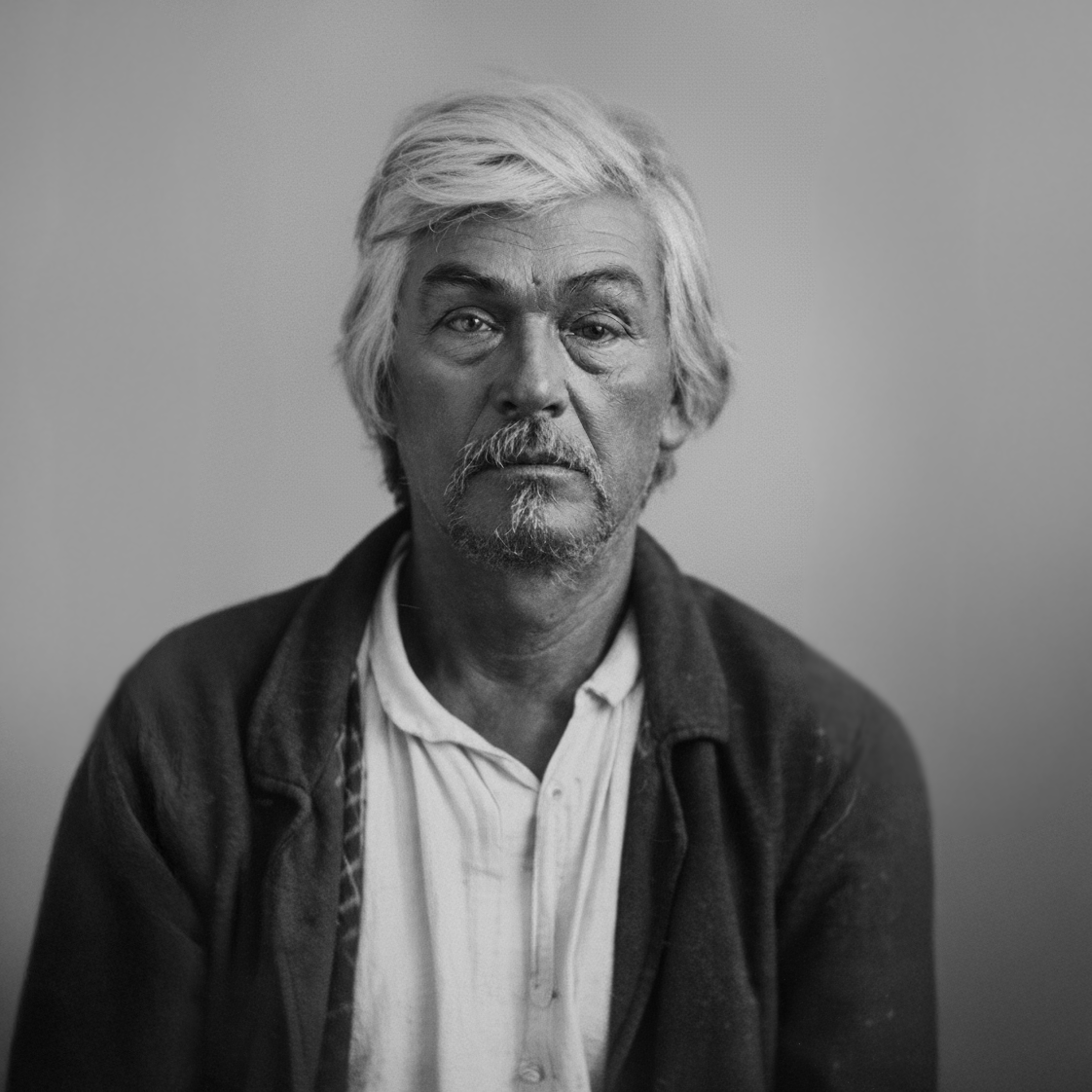
TOM STARR
A towering figure of the Cherokee frontier, Tom Starr earned a reputation as a relentless fighter during the bloody feud that tore his Nation apart. Feared and revered, his ruthless code of loyalty and vengeance birthed Oklahoma’s most infamous outlaw bloodline.
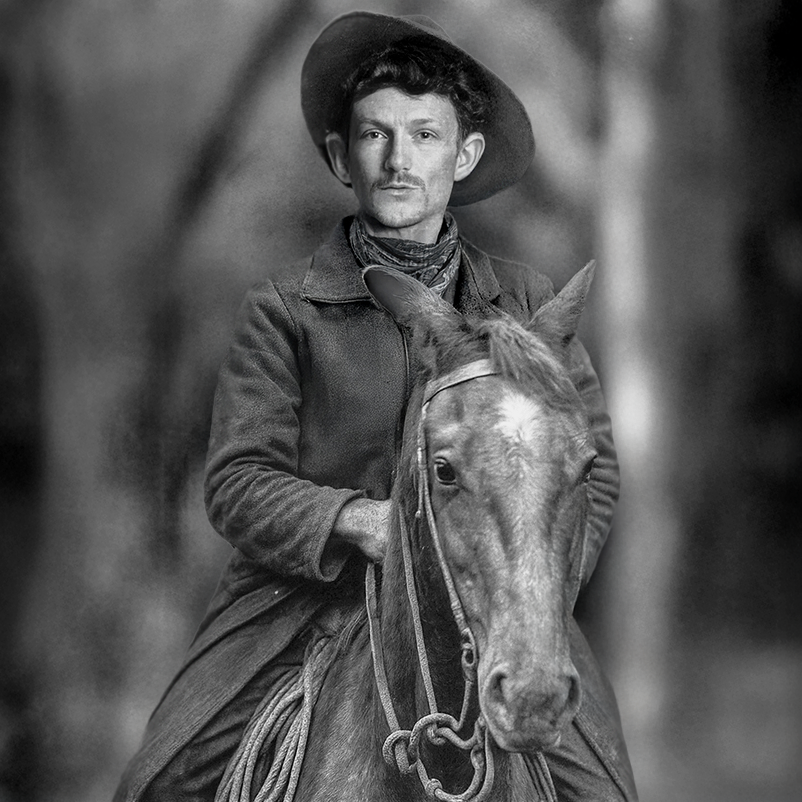
SAM STARR
Son of the feared Cherokee warrior Tom Starr, Sam inherited both his family’s feuds and their fierce reputation. At just twenty-five he wed Belle Starr, turning their Eufaula homestead into a sanctuary for fugitives and laying the foundation for Oklahoma’s outlaw dynasty.
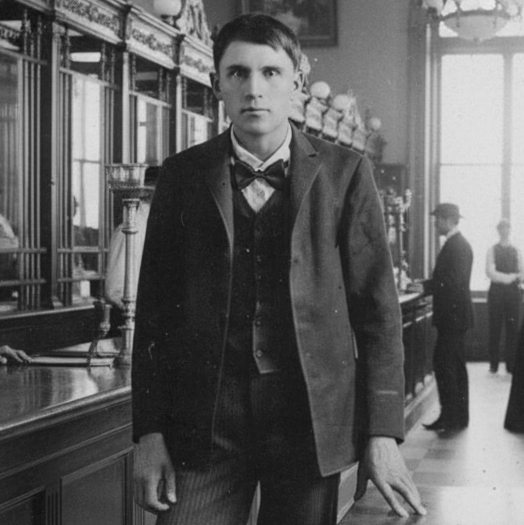
HENRY STARR
Born in 1873 near Fort Gibson, Henry Starr carried his uncle’s violent legacy into a new century. He masterminded audacious bank robberies—fourteen in five months—earning both presidential pardons and infamy as the last great outlaw of Oklahoma’s turbulent frontier.