
TOM STARR
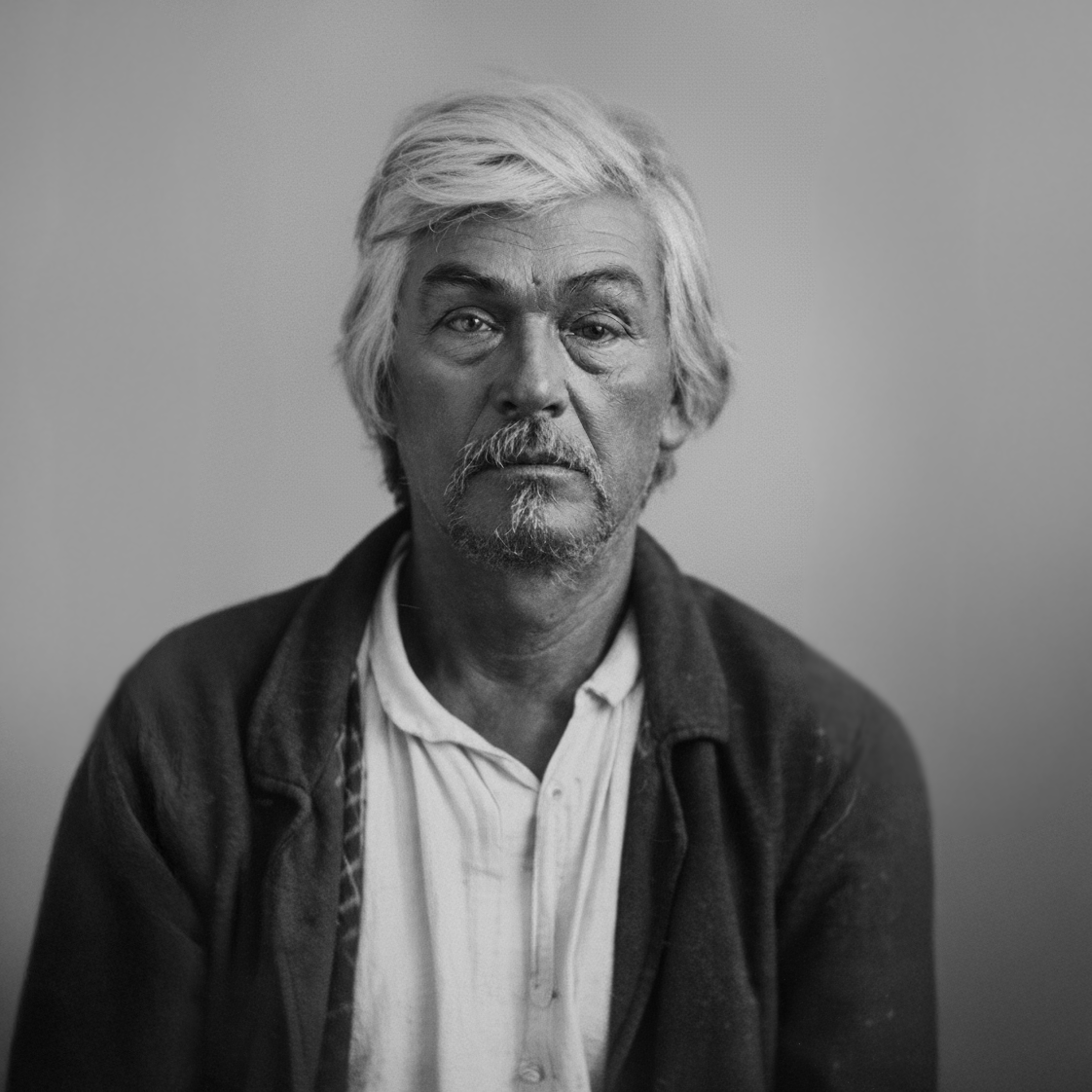
THE DEVIL AND TOM STARR
Prologue: The Ghost in the Canyon
The history of the American West is written in the dust of its trails and the legends of its outlaws. But before the Daltons, before the Doolins, and even before his own infamous daughter-in-law Belle Starr, there was a different kind of outlaw. His name was Tom Starr, and his story is not one of simple banditry but of a blood feud so profound it forced an entire nation to its knees. He was a man who moved like a phantom through the oak and pine forests of the Cherokee Nation, a giant whose shadow stretched across Indian Territory for decades. He was not just an outlaw; he was a force of nature, a sovereign power in his own right, and the architect of the first organized outlaw sanctuary in what would become Oklahoma. To understand the lawless heart of the Sooner State, one must first understand the man who taught it how to beat.
A Legacy of Royalty and Ruin – The Starr Inheritance
Tom Starr’s story begins not with his birth around 1819 in the Cherokee Nation East, but a generation earlier, with a fateful marriage that would braid his family’s fate inextricably with that of the Cherokee people. His grandfather, Caleb Starr, was a white man from Chester County, Pennsylvania, who found his destiny in Tennessee. There, he met and married Nancy Harlan, a woman whose lineage was her power. She was a member of the esteemed Deer Clan, one of the seven matrilineal clans that formed the bedrock of Cherokee society. Her mother was Ka-ti (Catherine) Kingfisher, daughter of the renowned Chief Tsu-la “Kingfisher.” This union was more than a marriage; it was a political and social ascension. In the Cherokee matrilineal system, clan membership and status were passed through the mother. By marrying Nancy, Caleb Starr, and by extension his children and grandchildren, were adopted into this powerful network. They were not merely citizens; they were, in a very real sense, Cherokee royalty. This status granted them influence, protection, and a voice in the complex councils of the Nation. It was a shield that would later prove as vital as any weapon to young Tom.
Caleb Starr was no mere settler. His bilingualism and connections made him a crucial intermediary in the volatile relationship between the Cherokee and the encroaching United States government. He became a close confidant and agent for Joseph McMinn, Governor of Tennessee from 1815 to 1821 and later a federal agent to the Cherokees. Starr’s role was intimate and wrenching: he was tasked with valuing Cherokee “improvements”—the homes, fences, mills, and orchards that families had built over generations—for the treaties that would ultimately seize the land out from under them. He was the man who translated policy into ledgers, who put a dollar value on a way of life. This work placed him firmly in the camp of those who believed accommodation and negotiation were the only paths to survival, aligning him with the faction that would become known as the Treaty Party, led by the wealthy and educated mixed-blood families of the Ridges and the Boudinots.
The pressure on the Cherokee Nation became unbearable after the discovery of gold on their land in Georgia in 1829. The Indian Removal Act of 1830 made the federal government’s intent clear. The Cherokee Nation was split into two bitter factions. Principal Chief John Ross, a master politician, led the National Party, which insisted on Cherokee sovereignty and fought removal through the U.S. court system, famously winning a moral victory in Worcester v. Georgia. Opposing him was the Treaty Party, which included Major Ridge, his son John Ridge, his nephews Elias Boudinot and Stand Watie, and their supporters, like the Starrs. They believed removal was inevitable and that signing a treaty was a grim necessity to secure the best possible terms and avoid utter destruction.
This was the world Tom Starr was born into—a world of escalating tension, where his family’s wealth and status were tied to a political position that was becoming increasingly dangerous. The Starrs, along with other Treaty Party families, began voluntarily moving west in the early 1830s, seeking to build a new life in what is now eastern Oklahoma. They settled in the rich, wooded hills of the Goingsnake District, believing they had escaped the conflict. They were tragically mistaken. The majority of the Cherokee people, forced west on the brutal Trail of Tears in 1838-39, arrived in Indian Territory starving, grieving, and furious. They blamed the Treaty Party for their suffering.
On June 22, 1839, the simmering hatred boiled over. Assassins murdered Major Ridge, John Ridge, and Elias Boudinot in cold blood, an execution of the ancient Cherokee “Blood Law” against those who sold communal land. For the Starrs and other Treaty Party families, the message was clear: they were all marked for death. They fled their homes once more, becoming refugees under the protection of U.S. troops at Fort Gibson. The Cherokee Nation was now in a state of civil war, and young Tom Starr, then in his early twenties, was about to be forged in its fire.
The Making of a Legend – Blood and Vengeance
The first act that set Tom Starr on his path is etched into the lore of the Territory. Sometime around 1840, a group had gathered near the Arkansas border to witness a foot race between a white man and an enslaved Black man. There, Tom Starr became engaged in a heated argument with a Ross supporter named David Buffington. Starr, a young man known more for his skill with a hunting knife than a gun, found himself staring down the barrel of Buffington’s pistol. In a flash, Starr drew his heavy blade and threw it, piercing Buffington’s heart before the man could pull the trigger. It was a shocking, public act of violence. From that day forward, Tom Starr was an outlaw, “on the scout,” rarely sleeping under a roof, moving like a ghost through the Nation he once called home.
His father, James Starr, now a prominent and vulnerable Treaty Party leader, continued to live under constant threat. That threat became reality on the morning of November 9, 1845. A party of armed Ross men rode up to the Starr homestead in the Flint District. James was on his porch, washing his hands in a basin held by his teenage son, Buck. Without warning, the riders opened fire. James Starr was killed instantly. Buck turned and ran, but was shot down; he would succumb to his wounds weeks later. Tom’s brother, Washington Starr, was also shot at but managed to escape by vaulting a fence and fleeing to the woods. A short time later, Tom’s cousin Suel Rider was killed in related violence. According to Starr family accounts, Ross-party men led by John Tato shot him and, as he lay dying, one of them plunged a knife into his chest—a detail preserved in oral tradition but absent from the surviving official records.
The news reached Tom Starr like a thunderclap. The details of that day—the brutality, the targeting of his younger brother—seared into his soul. Family lore and historical accounts agree on what happened next. Tom went to the freshly turned earth of his father’s grave. There, under the wide Oklahoma sky, he swore a solemn and terrible oath. He would hunt down and kill every single man involved in the murder of his father and brother. He would not rest until the debt was paid in full.
This was not the impulsive rage of a hot-headed youth; it was the cold, calculated declaration of a man embracing his destiny. He was not merely an outlaw; he was an a-yu-tsi, an avenger, acting on a principle that, while officially abolished by the Cherokee government in 1808, still held deep cultural resonance for many. Balance had to be restored.
Tom formed a guerrilla band that was, in essence, a family affair. It included his surviving brothers, his cousins from the allied West and Rider families, and a few trusted white allies like the Gerrings. They were not random bandits; they were a dedicated militia waging a personal war. Their campaign was ruthless and efficient. Starr became a master of asymmetrical warfare decades before the term was coined. He used the border with Arkansas as a sanctuary, slipping across the line when the Cherokee Lighthorse or U.S. troops drew too close. He cultivated a network of safe houses among sympathetic Old Settlers and white Arkansans who opposed John Ross.
His cunning became the stuff of legend, recounted in whispers throughout the Territory. On one occasion, pursuers were baffled when they tracked his fresh horse tracks directly to an abandoned cabin, yet found no tracks leading away. The mystery was solved years later when Starr revealed he had shoed his horse with the shoes on backwards, making it appear he had traveled in the opposite direction. Another time, cornered by a posse with bloodhounds on the banks of the rain-swollen Canadian River, he plunged into the icy water and swam to an overhanging willow. Holding onto a branch with his teeth to keep his nose and mouth just above the surface, his entire body submerged, he remained motionless for hours until his pursuers, convinced he had drowned, called off the search. For weeks, he was reported dead, only to resurface later in Texas.
To avenge Suel Rider’s stabbing, Tom reportedly had an associate lure the killer, a man named Big Stand, from a social gathering with the promise of whiskey. When Stand arrived at the designated spot, Starr’s men shot him from his horse and then finished him with a knife after scalping him. Mirroring the death he had dealt.
The level of revenge Tom sought can be summed up in this quote from Jno Candy to Stand Wate in a letter on April 10th, 1846. Stand had asked him to report back to him regarding his good friend, Tom:
“I promised to write to you if anything of importance took place. You will doubtless recollect that Stand (Big Stand, not Stand Wate) the murderer of James Starr was killed and scalped and that Faught was caught for decoying him and has since been hung. Since that time Olo Cornsilk has been killed and robbed of a negro. Mrs pack has had some negro children kidnapped. Barrow Justin has been caught tried and was hung yesterday Ecoowee became State’s witness against him. Bug John Brown (one of Toms Riders) and his company caught a horse thief and they have killed him. It is now rumored that he and his company, that is Brown have cut up another man in Flint in his own house. I forgot to mention that another man was killed at Ellis Harden’s. This man it is said was one of the company in Downing’s gang on the mountains on the Mountains. He was scalped.
I think there is now to be no end to bloodshed, since the Starr boys and the Riders have commenced revenging the death of their relatives. A dozen or so are implicated, and I am afraid that some of them will be more desperate than the first ones. Murders in the country have been so frequent that the people care as little about hearing these things as they would hear of the common dog. The question may be asked – who first began the troubles in the Cherokee Nation? The answer is obvious. We all know it well.”
That answer was John Ross.
For years, the Cherokee government under John Ross offered rewards, sent Lighthorse police, and pleaded for federal troops, but Tom Starr remained at large. He was a ghost, a rumor, a name mothers used to frighten children into obedience. The violence escalated into a low-grade war, with assassinations and reprisals becoming commonplace. The U.S. government, frustrated and alarmed by the instability, began to pressure Chief Ross to find a solution. The situation was untenable. The Cherokee Nation had been brought to a stalemate by one man and his unshakable will.
The Treaty on The Canadian – A Nation Bargains with a Son
By 1846, the Cherokee leadership faced a humiliating reality. They could not defeat Tom Starr and his Riders. They could not capture him, outsmart him, or intimidate him. His campaign of vengeance had effectively paralyzed parts of the Nation. More importantly, his cause—avenging his father’s murder—held a powerful, sympathetic appeal to a significant portion of the population, even those who disapproved of his methods. He was seen by many not as a common criminal, but as a wronged son exercising a primal right.
In a move without precedent in Cherokee—and perhaps American—history, the government decided to negotiate. They would seek a treaty of peace not with a foreign nation, but with one of their own citizens. Delegates were sent to find Starr and present an offer: a full and complete pardon for him and all his men for any and all crimes committed. In return, they must lay down their arms, return to their homes, and live as peaceful citizens. The offer, recognizing the scale of Starr’s victory, also included a significant concession: an annual stipend and the formal deed to a large tract of land on a remote bend of the Canadian River, land he already used as a hideout.
For Starr, the offer was a vindication. He had won. He had forced the government that had hunted him to not only forgive him but to pay him. He accepted the terms. For two years, an uneasy peace held. Tom Starr became a farmer and a family man, seemingly content to live within the bounds of the law he had defied.
But the bitterness of the factional war ran too deep. In 1848, for reasons that remain unclear—perhaps a fresh accusation, a lingering grudge, or a simple refusal to let the past be—authorities moved to arrest Starr again. This was a catastrophic breach of the treaty. To Starr, it proved the government’s word was worthless. He would not be dragged into a courtroom and hanged by the very men he had defeated. He broke his parole and fled back to the rugged hills, more dangerous and distrustful than ever before. The war was back on.
This second period of outlawry was even more intense. The Cherokee and U.S. authorities pursued him relentlessly, but Starr’s cunning had only grown. He was a master of the territory, using his network of allies and his intimate knowledge of every creek and canyon to stay one step ahead. Large rewards were posted for his capture, “dead or alive,” attracting a host of opportunistic bounty hunters and U.S. Deputy Marshals, all of whom failed.
The cycle of violence seemed endless until the political landscape shifted once more. The death of Chief John Ross in 1866 and the subsequent election of Lewis Downing, who was more sympathetic to the Treaty Party faction, created an opening for a lasting peace. The government once again approached Starr, offering a new pardon and a reaffirmation of his land rights.
Exhausted by decades of war and confident in the new administration, Starr accepted. He returned to his land, this time to stay. He had survived them all.
The Outlaw Kingdom – The Birth of a Sanctuary
The land granted to Tom Starr was far more than a farm; it was a sovereign nation in miniature. His homestead in the Canadian District of the Cherokee Nation, hidden in the rugged hills along the Canadian River, was a geological fortress. It was situated in a deep, narrow canyon with only one practical entrance—a narrow trail that could be easily watched and defended. Any approaching rider would be visible for miles, and any hostile party would be funneled into a deadly kill zone. The rugged, wooded hills surrounding it provided endless escape routes and hiding places.
The formidable reputation of Starr’s sanctuary was forged in the fire of the Civil War. Starr, like many Cherokee from the Treaty Party faction, naturally allied with the Confederacy, serving as a scout for the brilliant and fierce General Stand Watie. In this capacity, he didn’t just fight alongside the irregular guerrilla fighters who defined the brutal border war—he forged blood oaths with them. He operated with William Clarke Quantrill’s raiders, including the young, ruthless Frank and Jesse James and the ferociously loyal Cole, Jim, John, and Bob Younger. These men, veterans of America’s most vicious guerrilla conflict, must have marveled at the strategic perfection of Starr’s fortress—a citadel designed by a master of evasion that embodied the very art of war they practiced. Their presence added a devastating new dimension to the sanctuary: they became an arsenal of knowledge, a living academy for outlawry. They could teach a new generation of bandits advanced tactics in ambush, counter-surveillance, and rapid dispersal. Under their tutelage, every horse thief and bank robber who passed through Tom Starr’s domain didn’t just find shelter; they received a graduate-level education in how to vanish. With these legendary guerrillas in residence, Starr’s homestead became more than a hideout; it was a training ground that made every outlaw who visited it more cunning, more elusive, and far more dangerous.
Tom Starr’s homestead was the first organized outlaw sanctuary in the West. His protection was multi-layered and formidable. He had:
-
Jurisdictional Immunity: As a citizen of the Cherokee Nation, Starr lived on sovereign land. U.S. Deputy Marshals had authority there, but it was complicated and required navigating Cherokee politics. Starr’s elite status and fearsome reputation acted as a powerful deterrent.
-
Physical Security: The geography of his land was a natural defensive marvel. Lawmen approached with extreme caution, often in pairs, and it was common practice to actually call out and announce their presence before entering the canyon to avoid being mistaken for a threat and shot.
-
Cultural Protection: Starr’s deep clan connections meant he had a network of allies throughout the Territory who would warn him of approaching danger and provide secondary safe houses.
-
Reputation: The legend of Tom Starr—the man who had fought the Cherokee Nation to a standstill—was itself a weapon. No bounty hunter or marshal wanted to be the one who disappeared into that canyon and never came out.
The guest list at Starr’s homestead was less a register of visitors and more a roll call of post-civil war American infamy. It was the premier destination for an elite class of criminal—men for whom the war never ended. The core was his old comrades: William Clarke Quantrill’s shattered guerrillas, including “Wild” Bill Heffington and other bushwhackers, who found a familiar, warlike refuge with the only man whose strategic mind matched their own. Naturally, this included the James-Younger axis—Jesse and Frank James, Cole, Jim, and Bob Younger—who used the fortress not merely as a hideout, but as a strategic command post between their audacious bank and train robberies in Missouri and Texas.
But Starr’s influence extended beyond his immediate Confederate network. His sanctuary became a universal haven for any outlaw shrewd enough to find it and tough enough to earn its protection. In later years, this included the multi-racial “Cook Gang,” featuring the phenomenally violent Cherokee Bill (Crawford Goldsby) and associates like Jim French. It attracted lone wolves and legends like Jack Spaniard, the enigmatic Cherokee outlaw, and hardcases like Felix Griffin. They came not just for the safety of the canyon’s geography, but for the security of its economy. At Starr’s, they found more than shelter; they found a community, a market for stolen goods, and the priceless currency of anonymity among peers. To have been a guest at Tom Starr’s table was the ultimate badge of honor, a certification that one had reached the highest echelon of the outlaw world.
The Patriarch’s Sunset – Legacy of an Outlaw King.
Tom Starr lived out his final years as a paradox. He was a wealthy and successful rancher, a ferry operator, and a devoted family man to his wife, Katy Reece, a full-blood Cherokee, and their nine children. By all accounts, his home was a place of hospitality for weary travelers, and he was a respected elder in his community. Yet, he never fully let his guard down. He was known to always sleep with two loaded pistols under his pillow, and every firearm in his house was meticulously maintained and ready for use. The man who had made peace with the world had not forgotten how to make war.
He died in 1890 at the approximate age of eighty. He was buried on his land, on the banks of the Canadian River he knew so well. His death marked the end of an era. The individual blood feuds that had defined the early Territory were giving way to the more purely criminal enterprises of the next generation.
Tom Starr’s legacy is the very foundation of Oklahoma’s outlaw identity. He was not a symptom of lawlessness; he was its primary architect in the region. His life demonstrates how the U.S. government’s policy of Indian Removal and the subsequent failure to prevent intra-tribal violence created a power vacuum and a culture of vengeance. He proved that a determined individual, leveraging sovereign territory and cultural allegiance, could effectively nullify federal authority.
The sanctuary he created at Younger’s Bend provided the blueprint for every outlaw hideout that followed. It taught figures like Jesse James and the Youngers that Indian Territory was a safe haven. This tradition continued long after Starr’s death, exploited by gangs like the Daltons and the Doolins. The U.S. Marshals’ practice of riding in pairs, the “Boomer” movement that illegally settled the land, and the eventual statehood of Oklahoma itself were all, in part, reactions to the kind of lawless autonomy that Tom Starr perfected.
He was a product of his time: a vengeful son, a cunning guerrilla, a shrewd strategist, and a protective patriarch. He was a man who operated by a code that predated the law that sought to judge him. The story of Tom Starr is the story of how a personal war birthed a legend and how that legend, in turn, shaped the destiny of a state. The weight of his legacy—forged in violence, polished by cunning, and set in the rugged geography of the Canadian River—continues to resonate in the annals of the American West, a complex and undeniable testament to the man who was king of his own bend in the river.
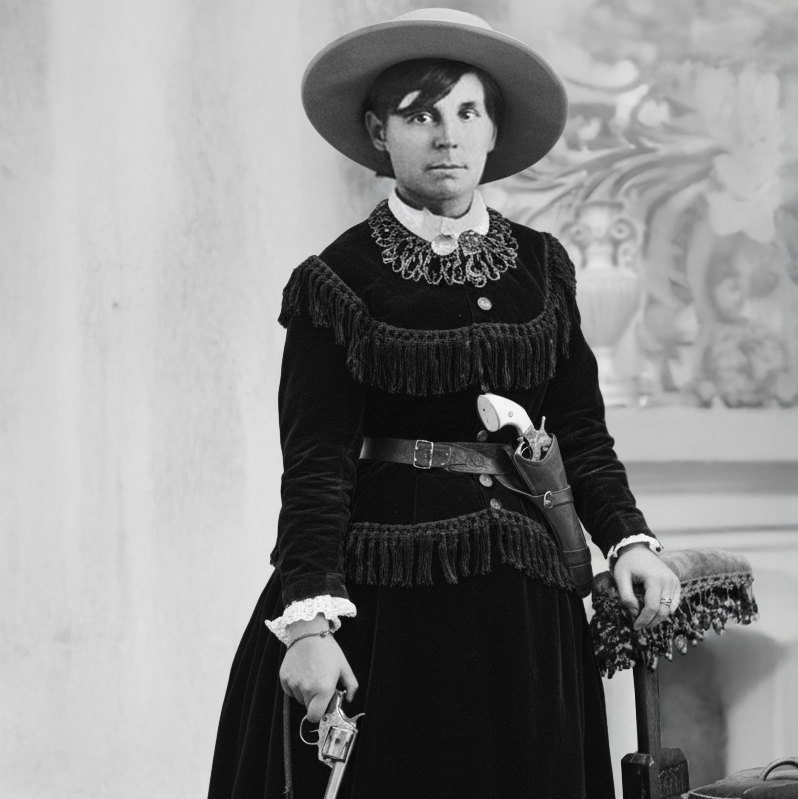
BELLE STARR
Belle Starr, the famed “Bandit Queen,” rose from cultured beginnings to command Younger’s Bend alongside Sam Starr. Witty, fearless, and cunning, she turned outlaw Oklahoma into her stage, mastering survival while building the enduring legend of America’s notorious outlaw woman.
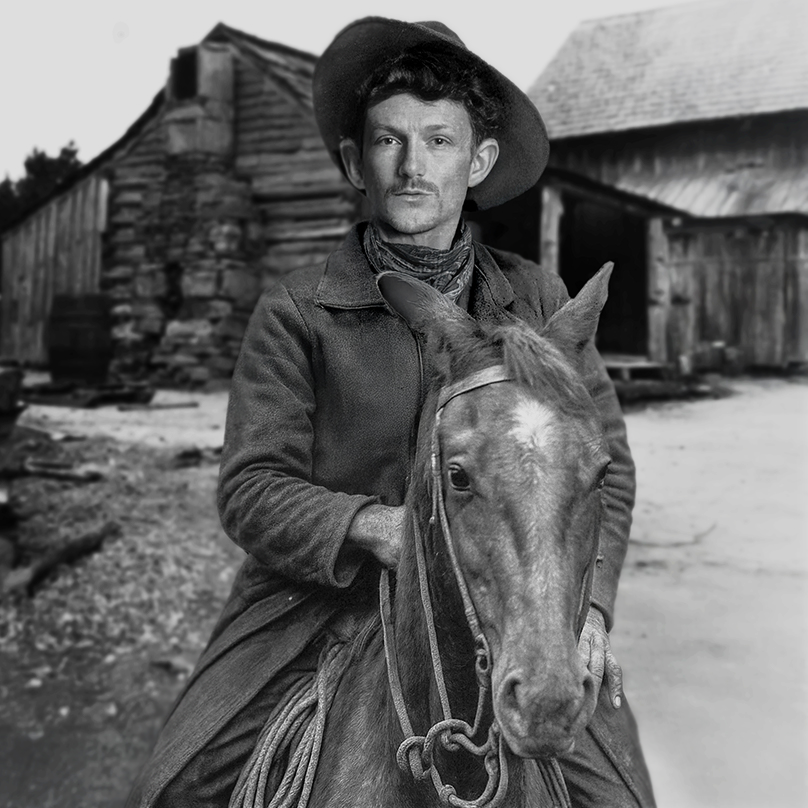
SAM STARR
Son of the feared Cherokee warrior Tom Starr, Sam inherited both his family’s feuds and their fierce reputation. At just twenty-five he wed Belle Starr, turning their Eufaula homestead into a sanctuary for fugitives and laying the foundation for Oklahoma’s outlaw dynasty.
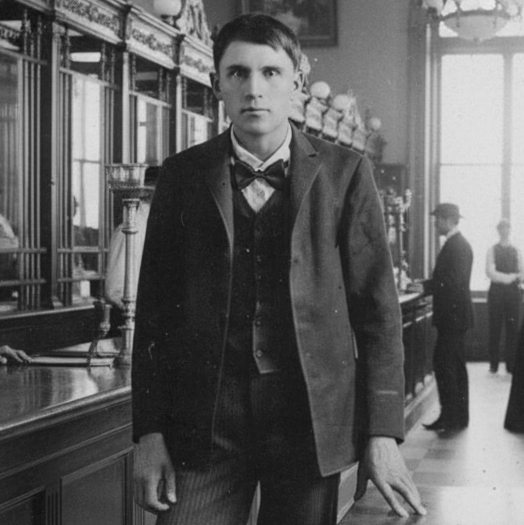
HENRY STARR
Born in 1873 near Fort Gibson, Henry Starr carried his uncle’s violent legacy into a new century. He masterminded audacious bank robberies—fourteen in five months—earning both presidential pardons and infamy as the last great outlaw of Oklahoma’s turbulent frontier.